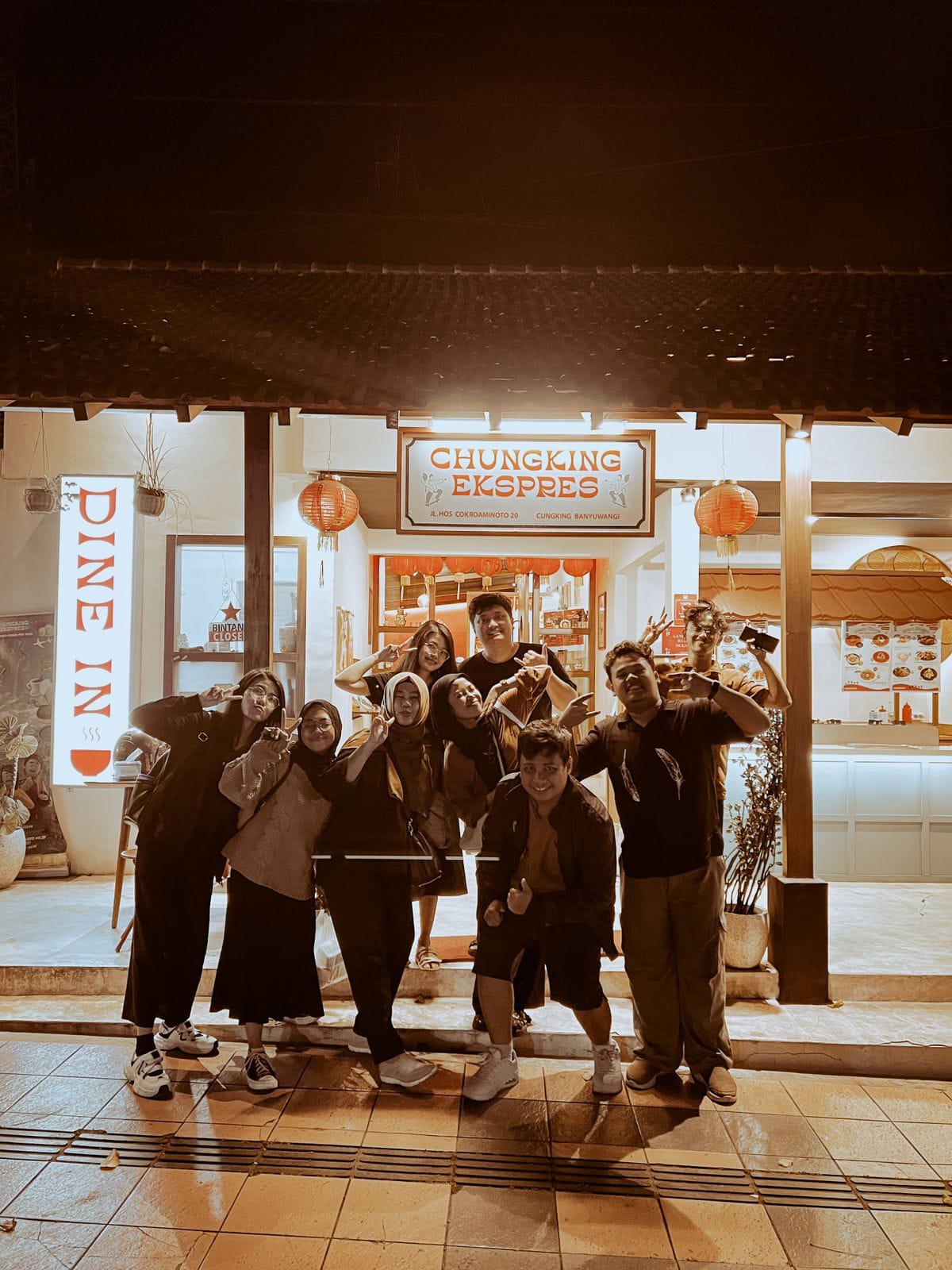

Having the opportunity to participate in a walking tour of Storia today was a wonderful experience. It was an interesting and insightful experience. It was as if we had stepped back in time.
I gained a lot from the tour: useful knowledge, surprising facts, and engaging stories.
It was surprising that I didn't know much about the area despite living here for almost 7 years since 2017.
In this write-up, I would like to share some interesting and useful writings with all of you in the hope that you might find it useful and interesting to experience it by yourself.
The Post Office and a Thread of Connection
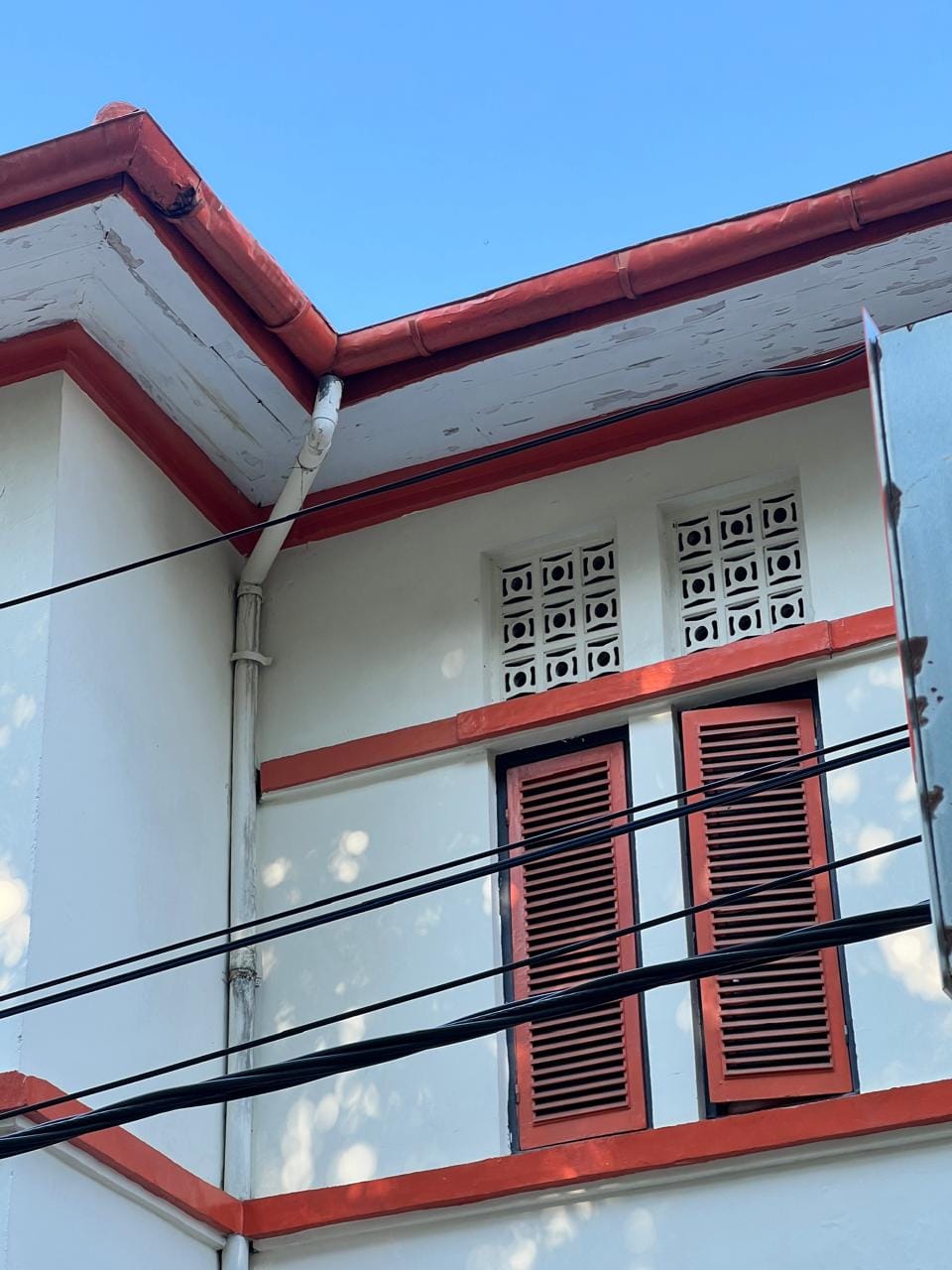
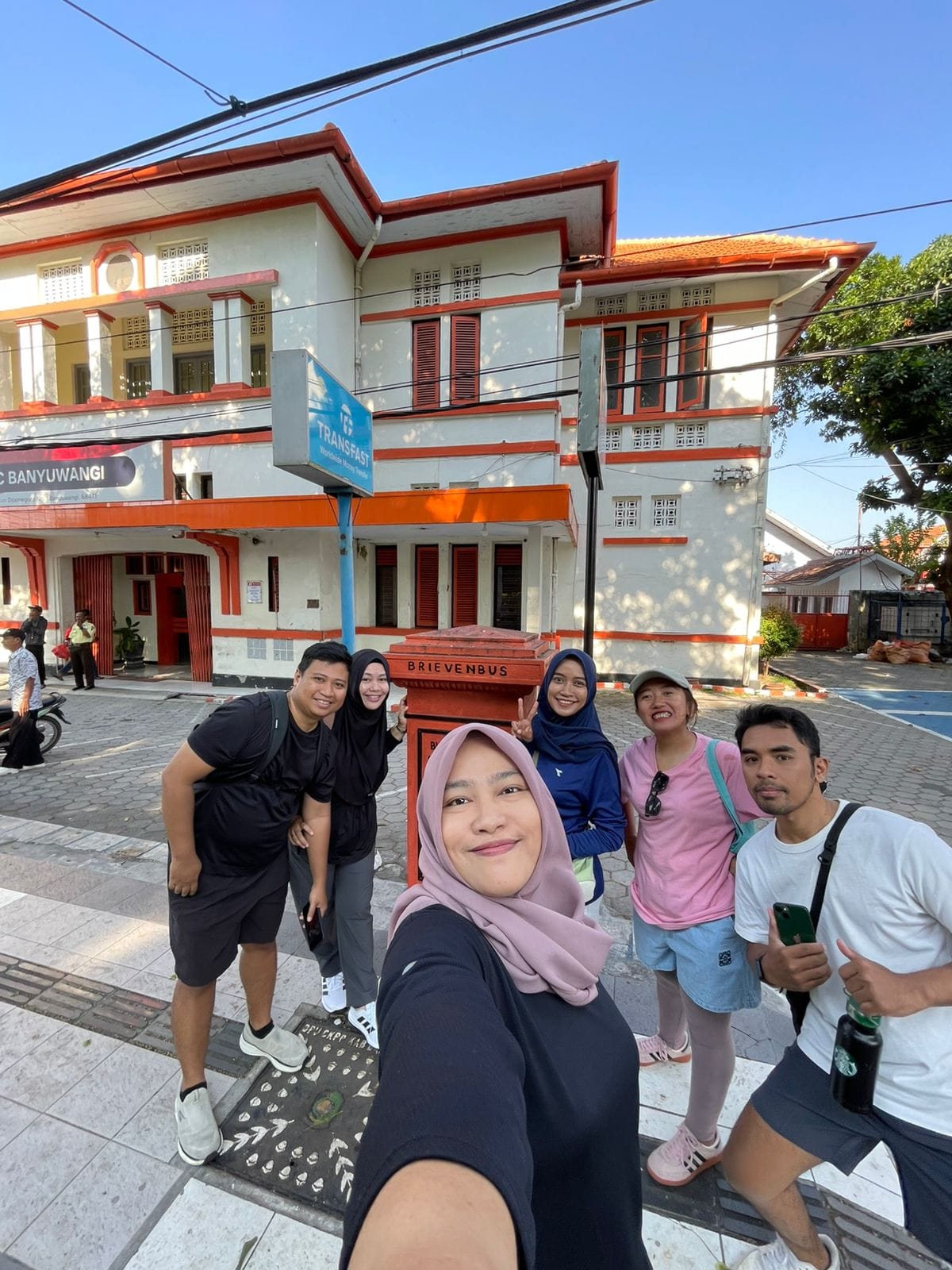
The morning began in front of the Banyuwangi Post Office, right across from Taman Blambangan. Several adults were taking morning exercise, some were walking briskly or stretching, while others were playing basketball on the court. It was a perfect reflection of Banyuwangi's rhythm: slow but vibrant at the same time.
A bright orange wall gleams under the morning sun, the signature color of Pos Indonesia, as the Banyuwangi Post Office stands as one of the oldest public buildings in town. As well as serving as a working post office, the building holds a mixture of heritage and function, connecting Banyuwangi with the rest of Indonesia, despite modernization around it.
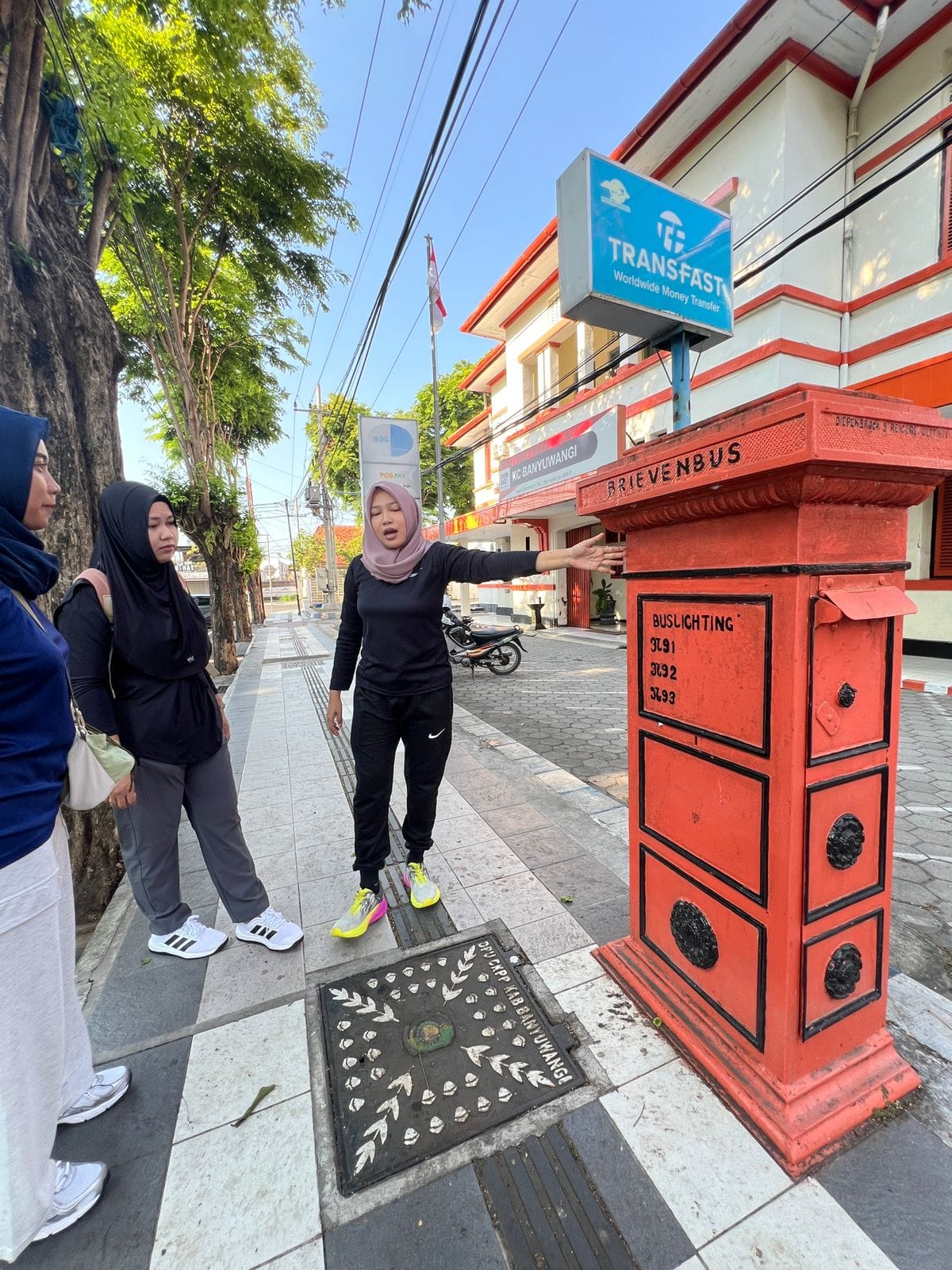
Across from the Kantor Pos stands a vintage red post box — sturdy, metal, and still in use. My friend mailed a postcard from it two years ago to a friend in another city, and it arrived safely. There’s something heartwarming about that: how a century-old ritual still works in a digital age.
People still stop by, slip envelopes through its narrow slot, and trust that the system — however old — will carry their words across distance. In a way, that post box feels like Banyuwangi itself: resilient, modest, and dependable.
The place may have changed, but its essence remains: a house of connection. Even in an age of instant messages, the post office endures — not as nostalgia, but as a living reminder of trust, distance, and human touch.
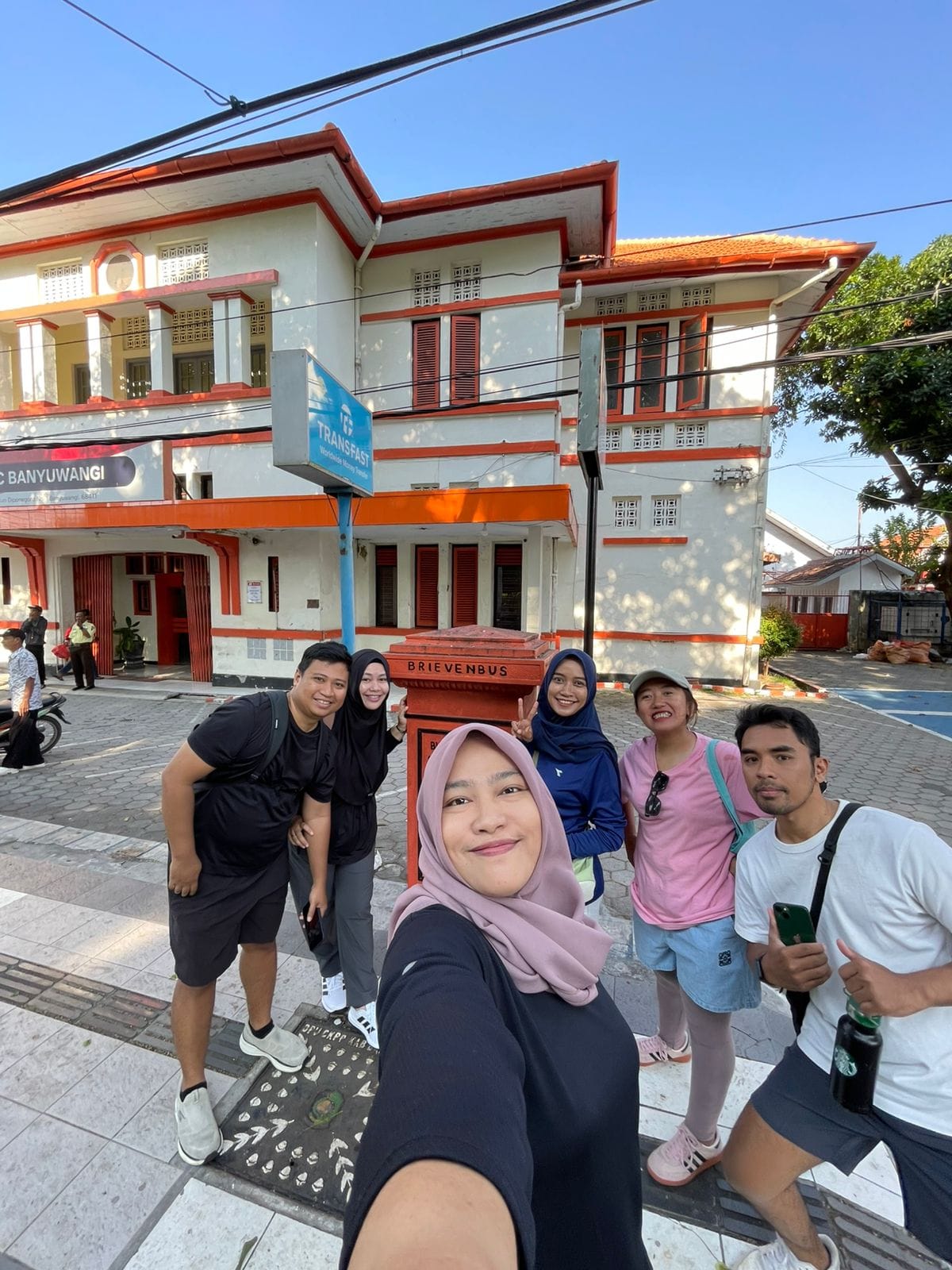
Take a moment, and imagine your message traveling through time, carried by the same spirit that once moved through these walls.
Inggrisan — The Cable House by the Square
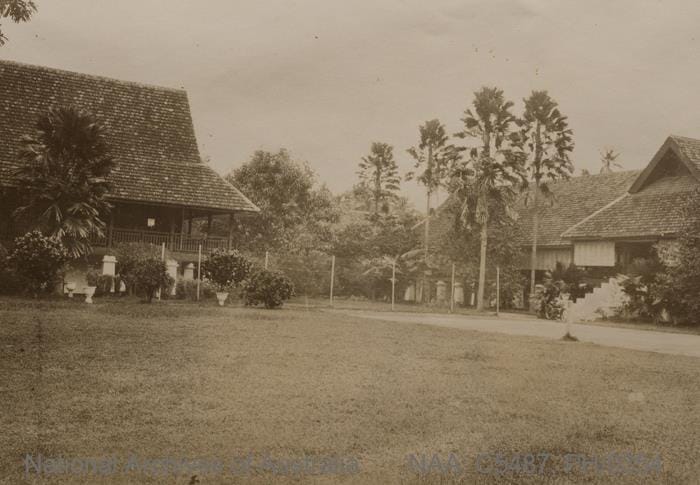
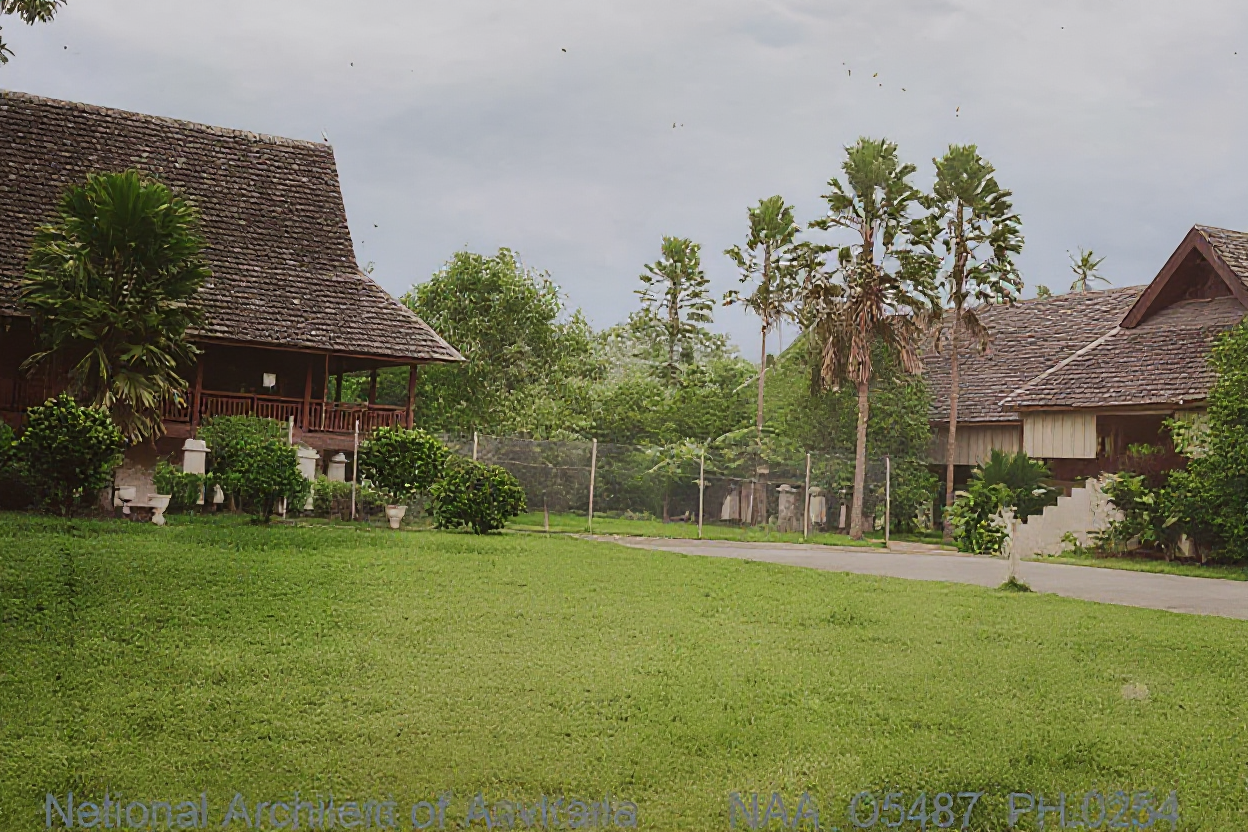
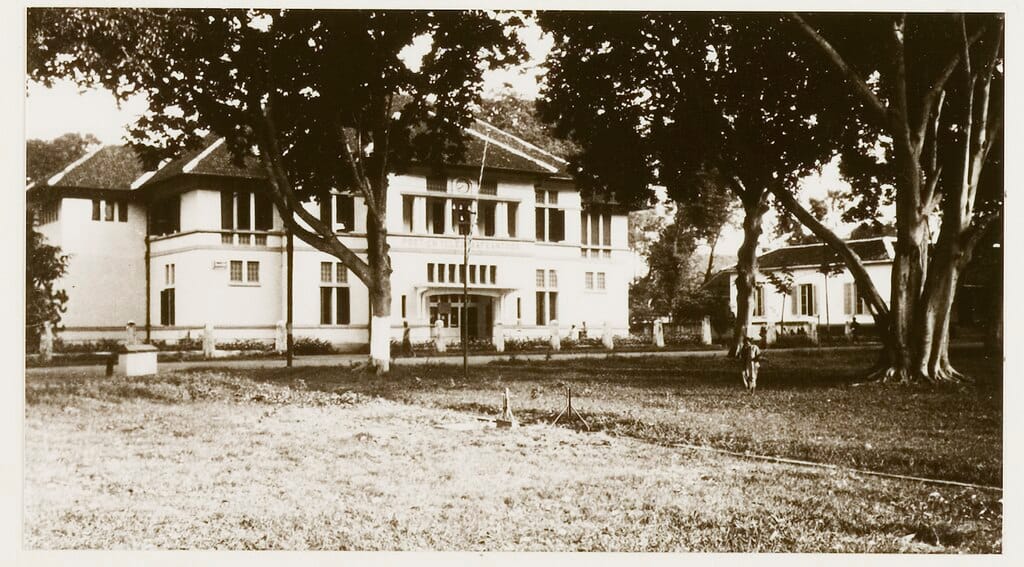
Inggrisan by https://recordsearch.naa.gov.au/SearchNRetrieve/NAAMedia/ShowImage.aspx?B=32018755&T=P&S=1
Just a few steps after the Post Office, we arrived at Inggrisan, a red-brick colonial complex tucked behind the Blambangan area. Locals call it the English place — and the name isn’t random.
Fun fact: in the late 1800s, this was where British engineers worked when the submarine telegraph cable linking Banyuwangi to Australia was laid. Archival materials from Leiden University’s KITLV collection and maps from the Topographisch Bureau Batavia place this site right beside the old Post & Telegraph Office, forming one of Asia’s earliest international communication gateways.
A few years ago, during a local construction project near Pantai Boom, workers unexpectedly uncovered pieces of the old telegraph cable, running toward the mangrove area and Pulau Tikus, where a small bridge still stands today. This discovery added tangible proof to what local historians had long believed — that Banyuwangi’s coastline once served as a cable landing point connecting Java to Australia.
Today, Inggrisan is under restoration (pugar), with the government planning to reopen it for public visits. Soon, visitors may once again walk through the same halls that once connected continents — where the pulse of early technology once passed through copper wires beneath the earth.
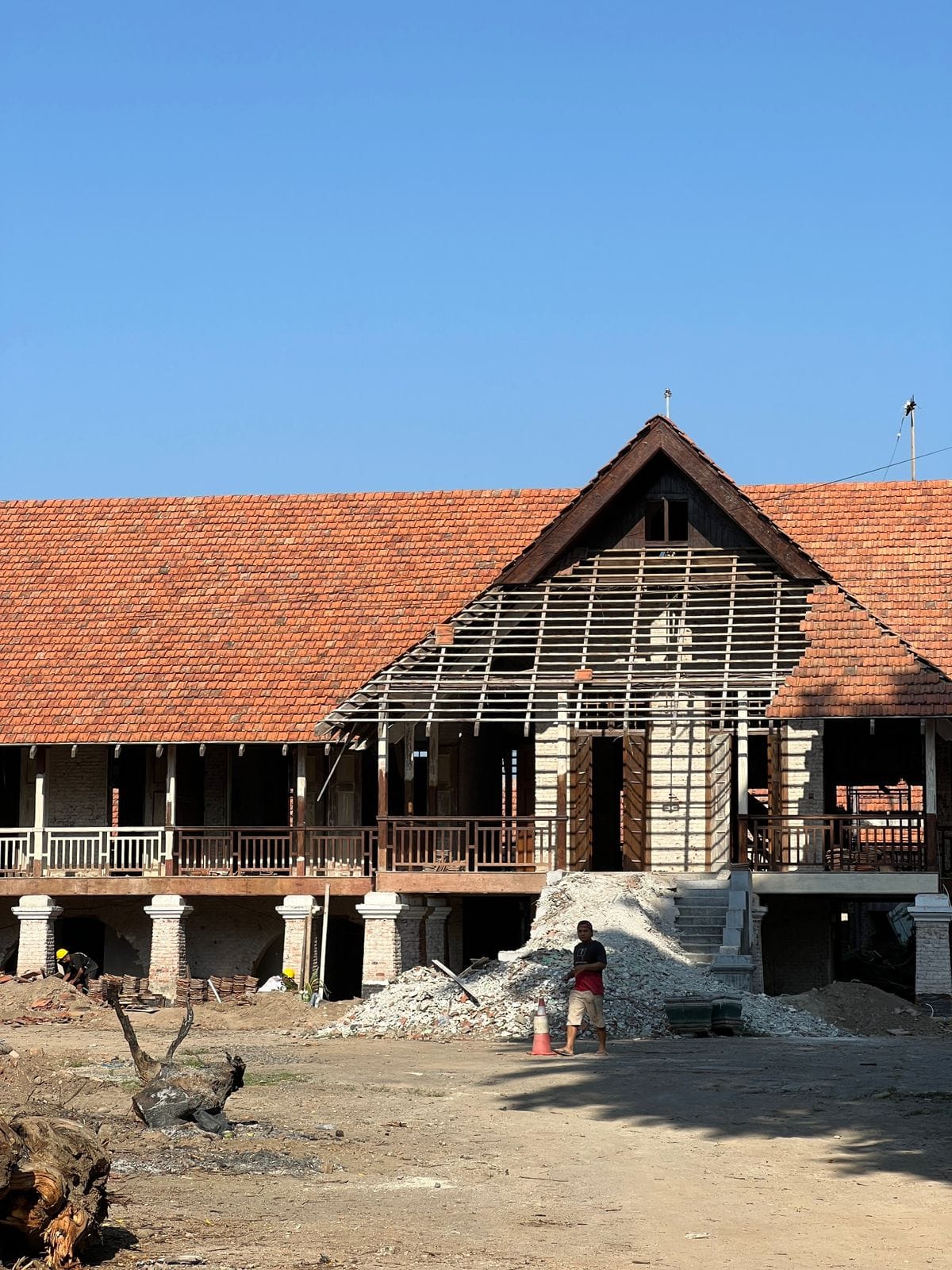
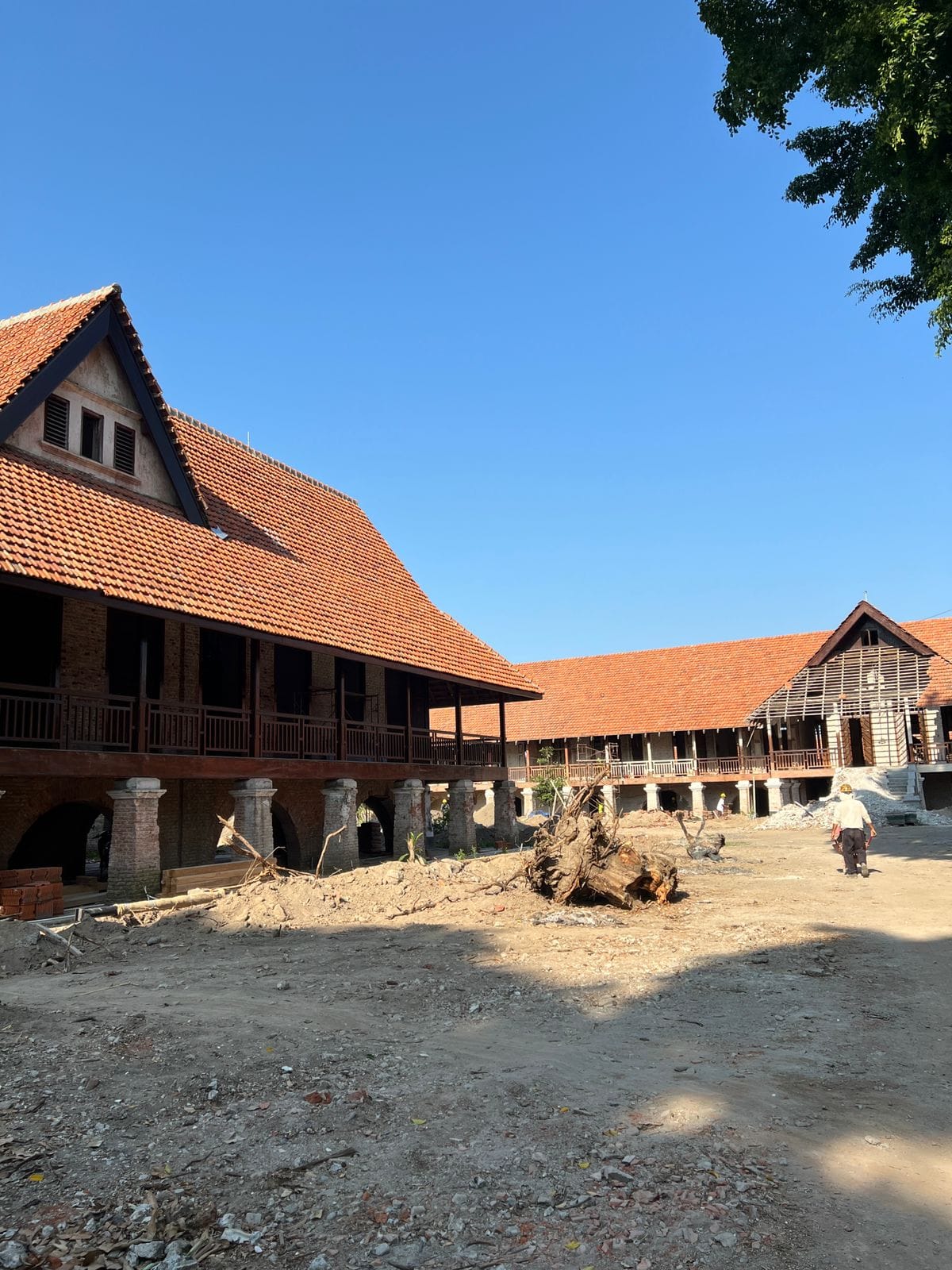
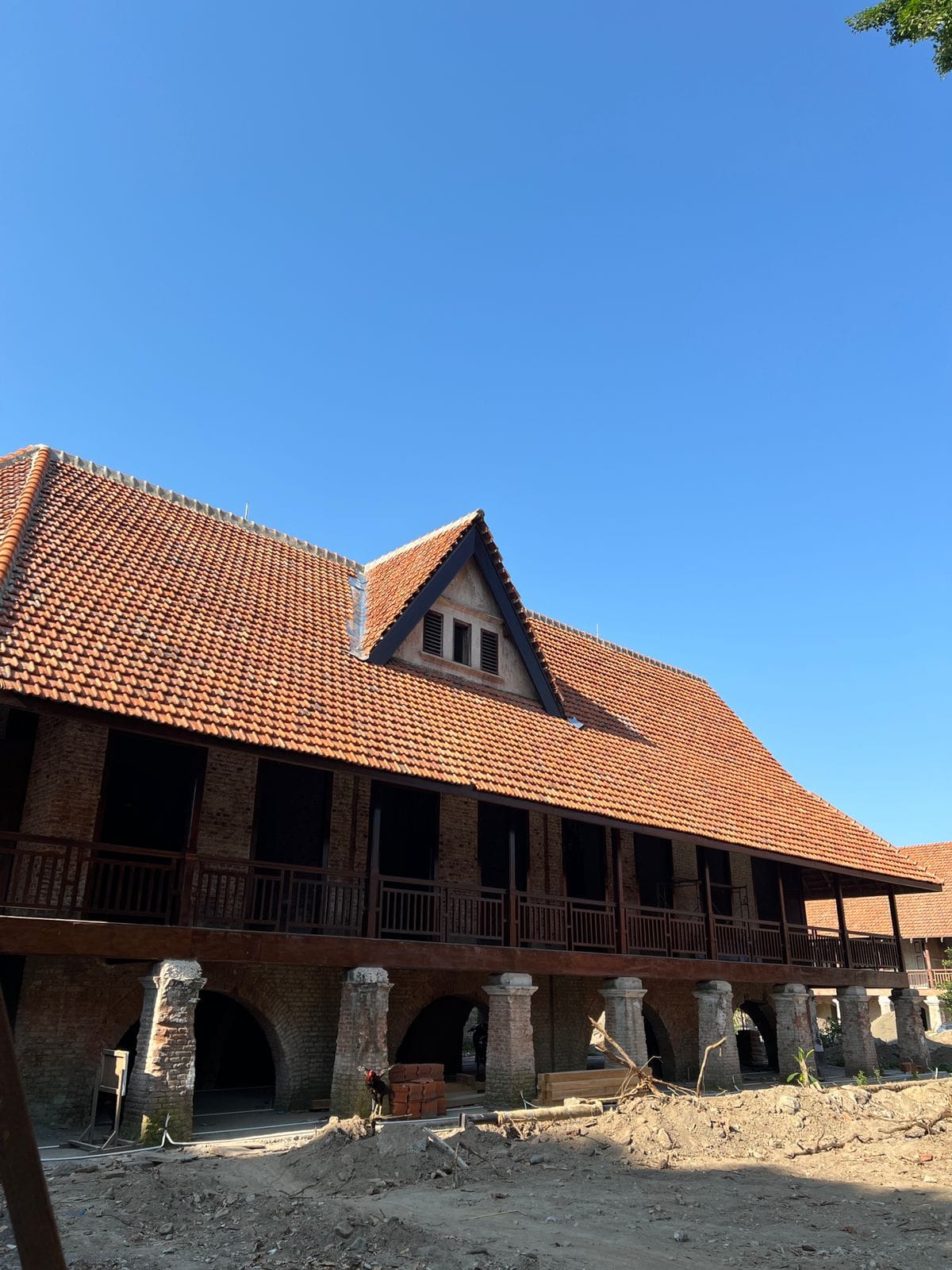
Why it matters: long before fiber optics, Banyuwangi already carried signals that bridged nations. The story of Inggrisan reminds us that this quiet town once played a vital role in connecting the world — one message at a time.
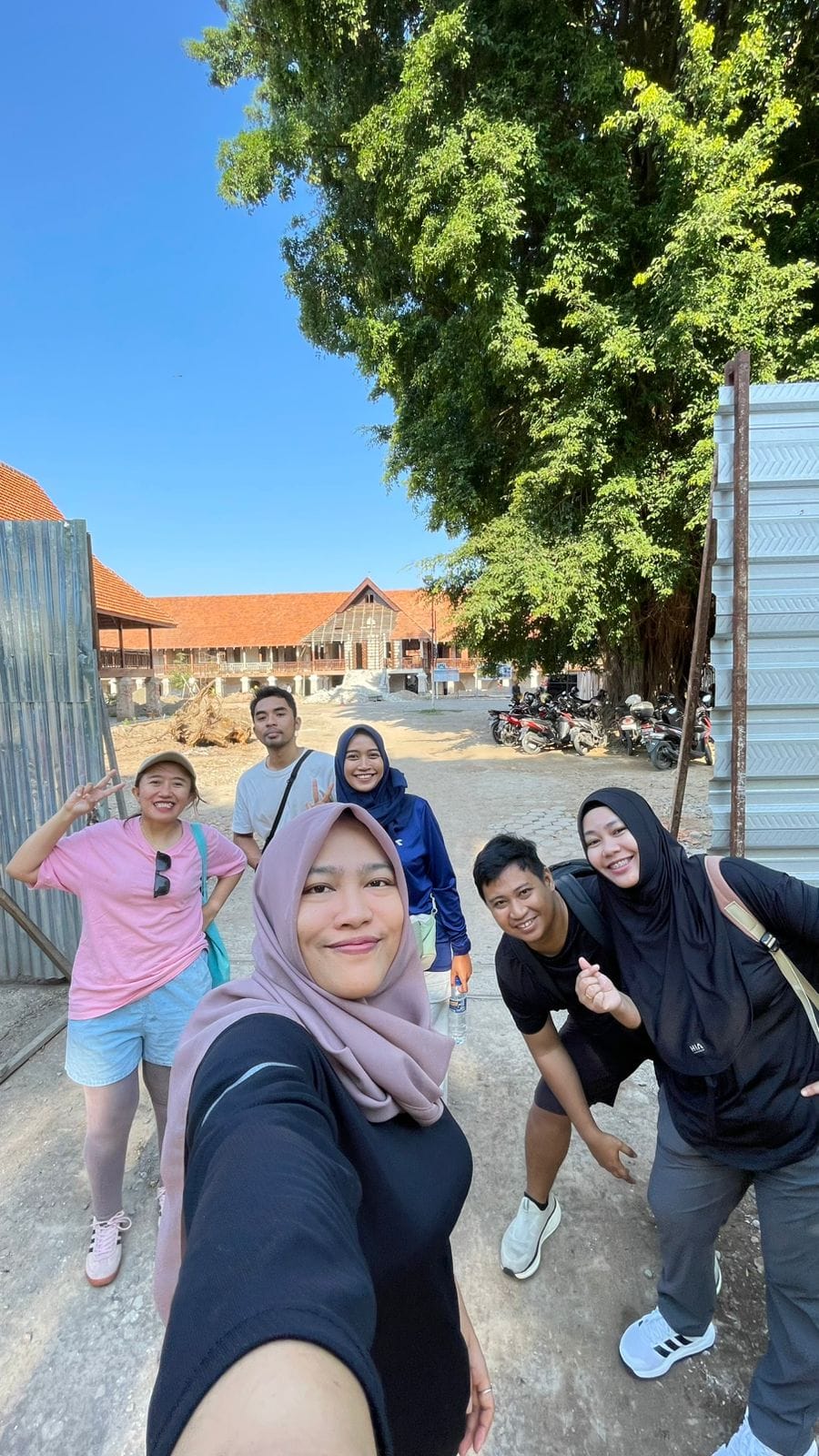
Turning the corner to Gedung Juang 45
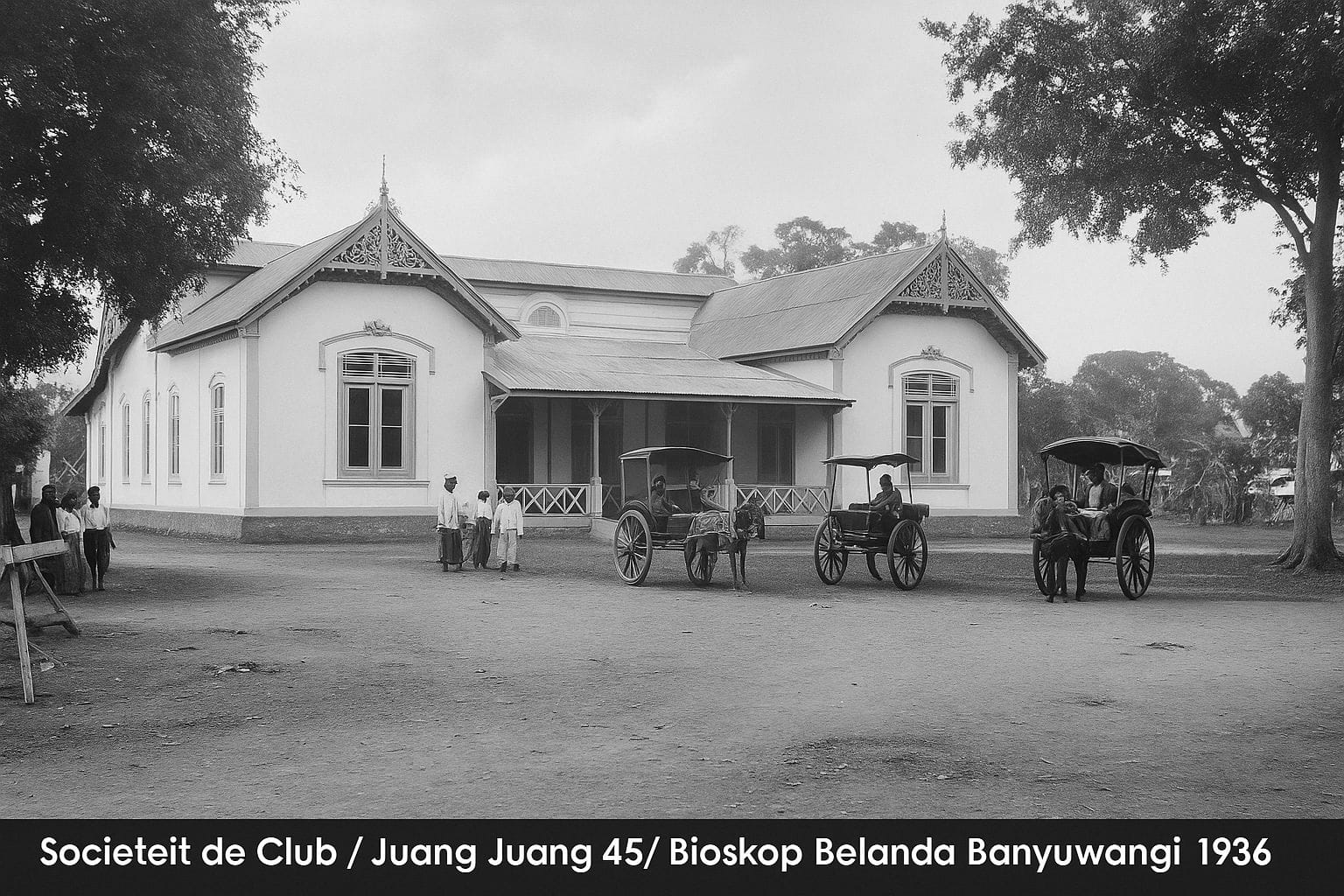
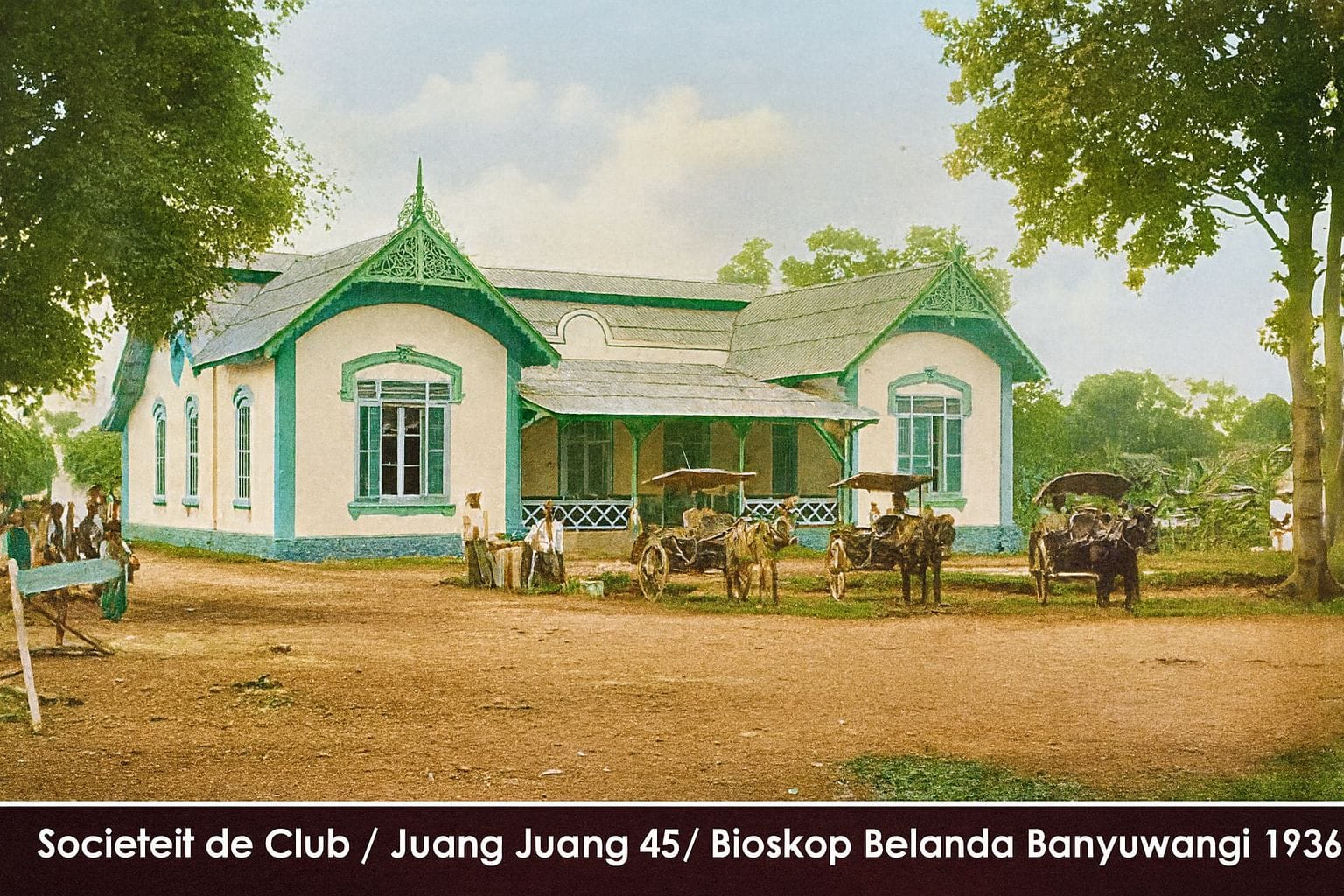
From Inggrisan we cut along the park, and there it was: Gedung Juang 45. In the late 1880s it opened as Societeit de Club—think ballroom nights, a small orchestra on weekends, billiards, and neat little gatherings after tennis. Then the era changed. The same rooms slowly turned into a people’s hall: choir practice, community meetings, youth sports, night classes—whatever the town needed. After independence, folks knew it as Gedung Nasional Indonesia.
Older Banyuwangi residents still talk about it as a meeting spot for independence fighters—a story you hear often in local memory, even if paperwork is thin. Time was rough on the building; much of the original shell gave way. What stands now is part restoration, part re-interpretation—new skin, same civic pulse.
Sadly, Gedung Juang, once a proud landmark of independence-era Banyuwangi, no longer stands in its original form. The building has been completely renewed—rebuilt rather than restored. Its history now lives only in memory and a few archived photos.
Fun facts:
- Origin story: Opened as Societeit de Club (late 1880s) in the classic colonial clubhouse tradition.
- Many lives, one address: ballroom → theater nights → community hall → badminton court → public venue.
- Name changes tell the story: later became Gedung Nasional Indonesia, and today most people say Gedung Juang 45.
- Local memory: often remembered as a gathering point for pejuang kemerdekaan (independence fighters).
Why it matters: it links our walk from wires (Inggrisan’s cable story) to voices—a room where the town keeps showing up. Buildings evolve; the purpose—bringing people together—sticks.
Quick note (Pasar Blambangan): just beyond here sits the square’s historic market. It’s under renovation, so we won’t go inside, but for much of the 20th century this was the daily engine—produce from the hills, fish from the coast, spices, and stories feeding the square each morning.
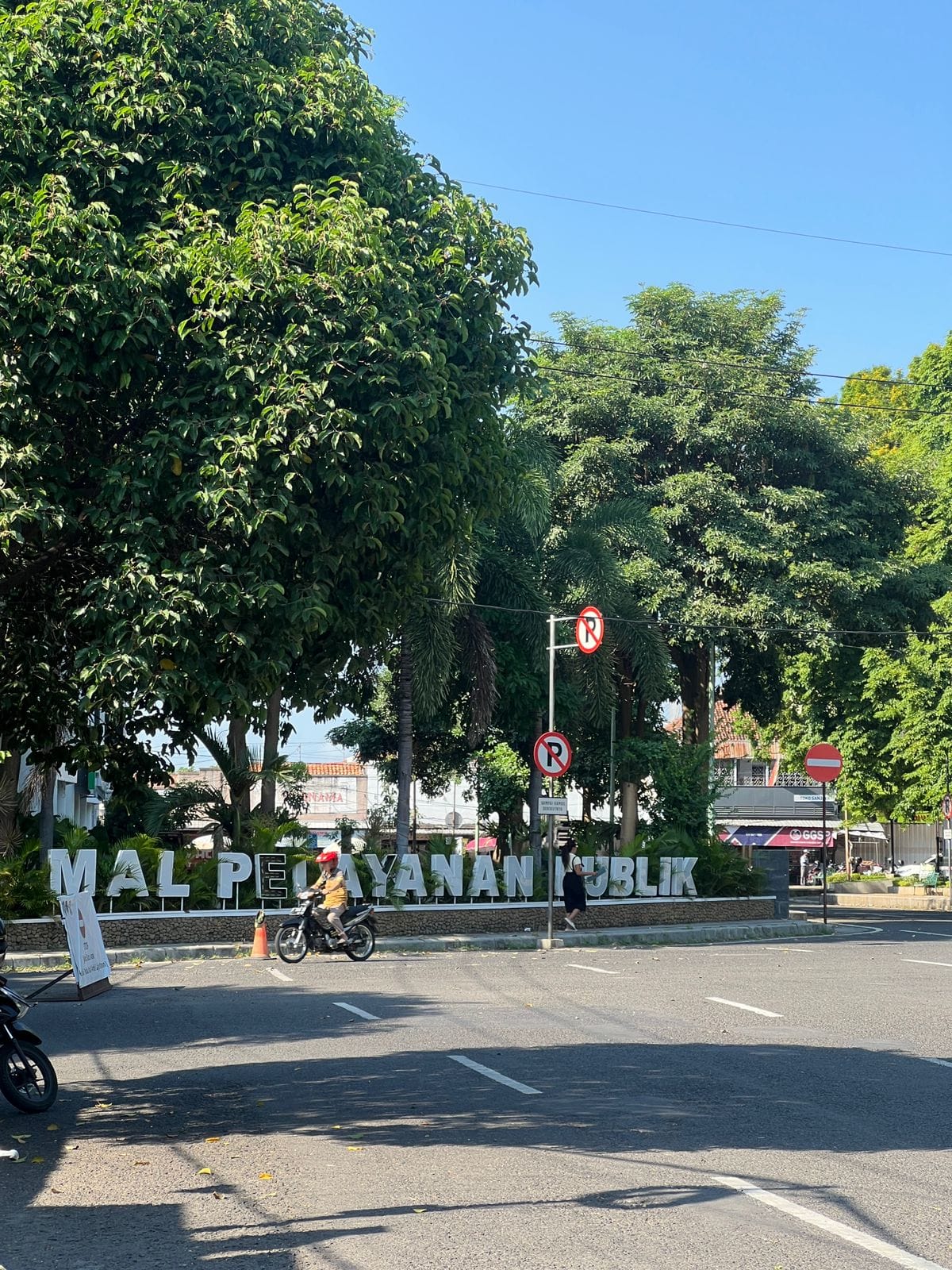
Mall Pelayanan Publik Banyuwangi. (Public Service Mall)
We stopped by Mal Pelayanan Publik—all glass and tidy lines—but this ground has a longer memory.
Here’s how this same address has changed roles over time:
- Jail (Penjara). In the colonial layout, this was the jail—control right beside the square.
- Police HQ (Mapolres). After independence, the address kept its authority, just with a new badge.
- Mall of Sri Tanjung (MOST). Later it tried to be a shopping mall, but the crowd never came.
- Now: Mal Pelayanan Publik (MPP). Today it’s a one-stop counter for IDs, permits, and public services.
Quick notes we loved:
- Then → Now: A clear pivot from control/security to access/service—you can feel it just standing out front.
- The Mall That Wasn’t: That “failed mall” chapter is part of the place’s honesty; it had to become a commercial ghost before turning into a civic hub.
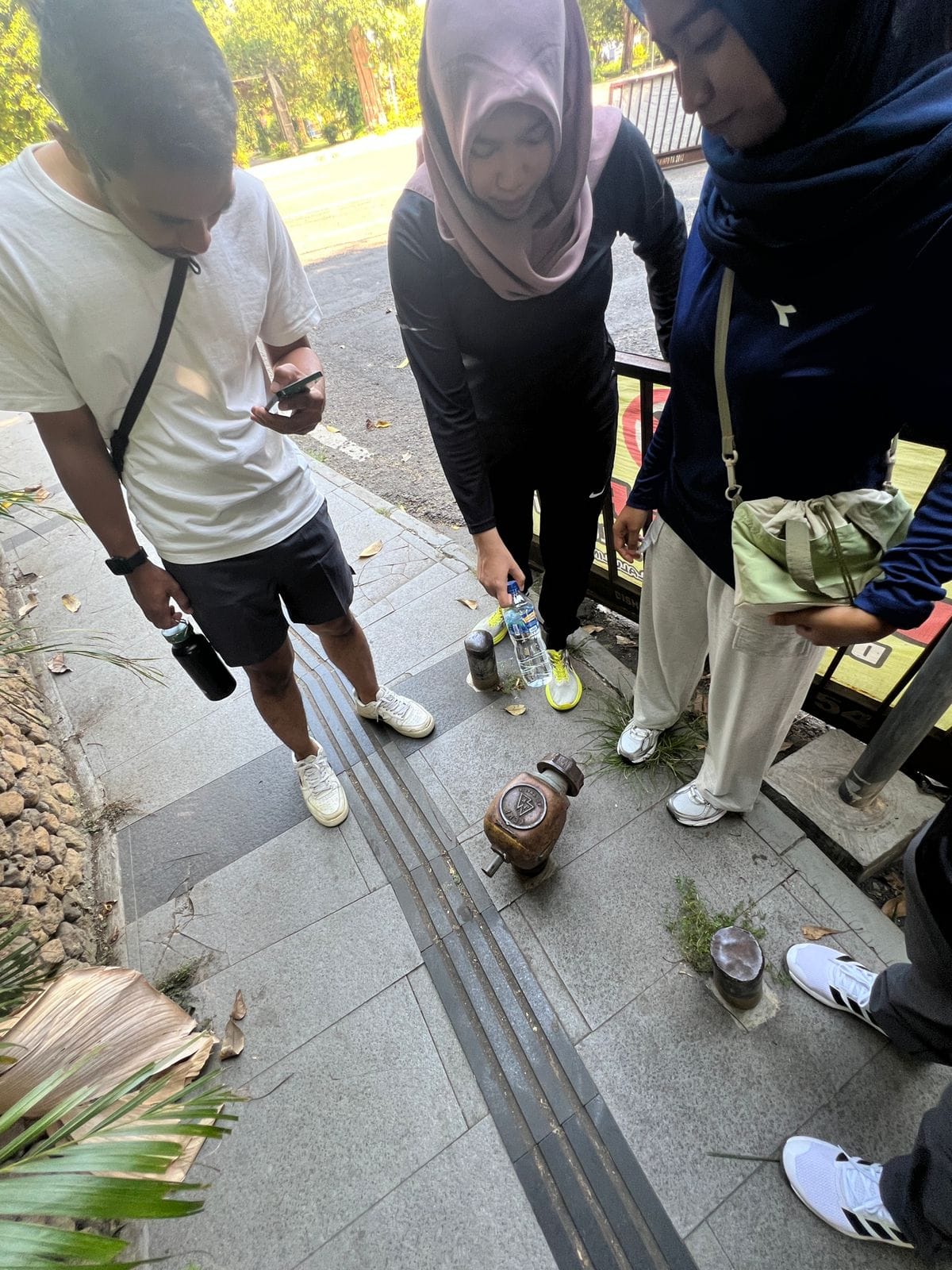
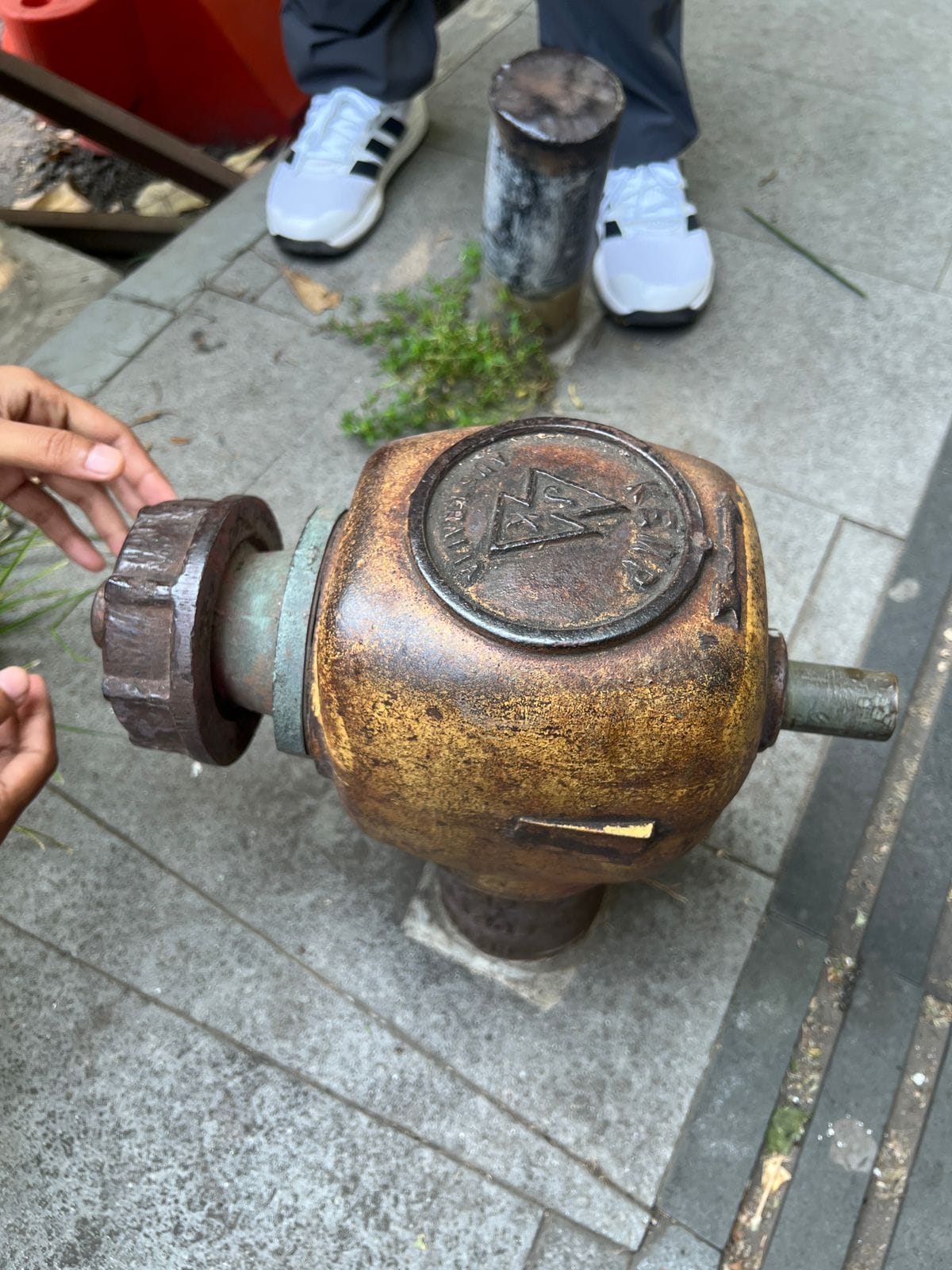
- Local lore: People still talk about an underground water system from the 1980s by an Australian contractor (often called “Kemp”), rumored to run beneath this block and link into older tunnels. It’s unverified—but very Banyuwangi.
Standing here, the footprint stays the same, but the meaning has flipped—from walls of authority to windows of service.
Pendopo Blambangan — quiet hall, long memory
We paused at Pendopo Sabha Swagata Blambangan—once a private regency hall, now a public porch where anyone can step in, breathe, and look over the square.
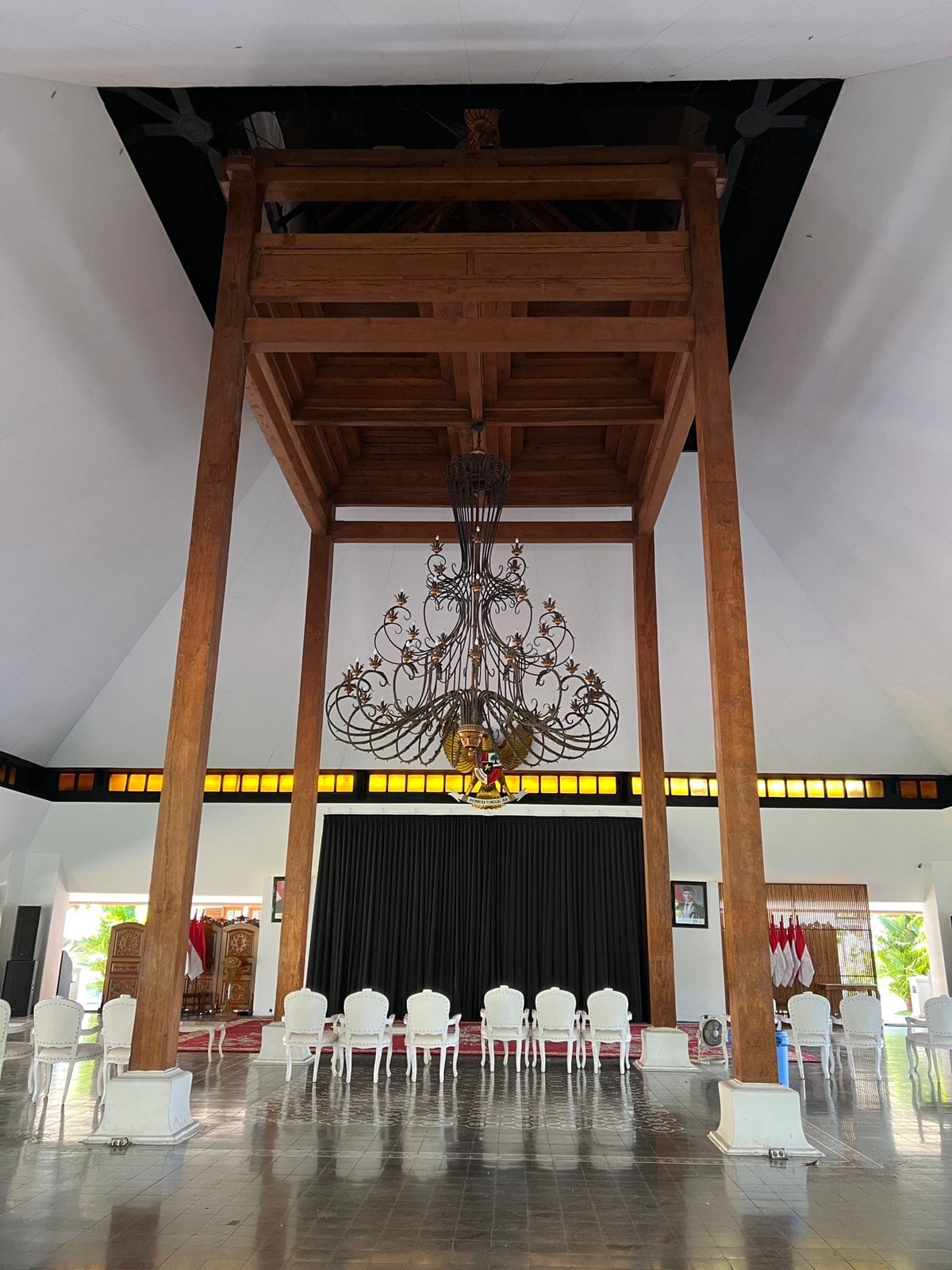
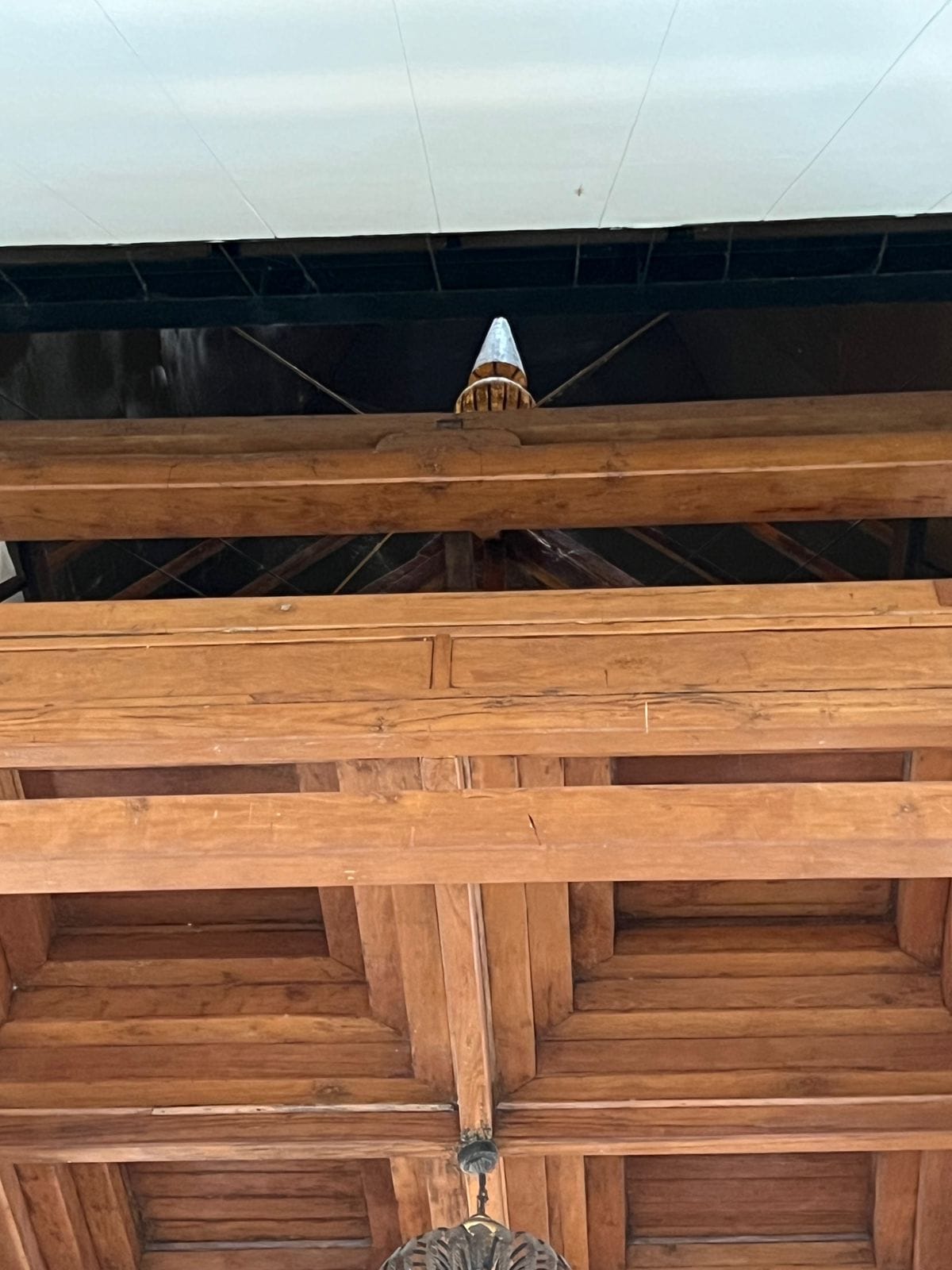
Four great wooden pillars (soko guru)
Four great wooden pillars (soko guru) carry the joglo like a spine. Locals say the main posts were cut from a single giant tree — an oral tradition that hints at the scale of craft and forest once tied to this place.
You’ll still hear the name Mas Alit—the first regent after Blambangan fell to the VOC in the 1770s—circling through stories tied to this civic core.
If you zoom out, the town’s layout makes sense from here. Old Banyuwangi followed the classic Javanese idea often called Catur Gatra Tunggal—a balanced square with:
- South: Pasar Banyuwangi (market/trade) (Wikipedia)
- West: Masjid Agung Baiturrahman (grand mosque / religious sphere) — Taman Sri Tanjung sits east of the mosque, placing the mosque on the west side. (Wikipedia)
- East: Penjara (colonial jail) — historically the “security” element; the Pendopo page notes the east side became a mall in modern times (aligns with today’s Public Service Mall area). (Wikipedia)
- Center: Taman Sri Tanjung (the people’s green/alun-alun). (Wikipedia)
It wasn’t just urban planning—it was philosophy: keeping government, worship, trade, and the commons in harmony. Even when power shifted—from kingdoms to colonial rule—that invisible structure stayed.
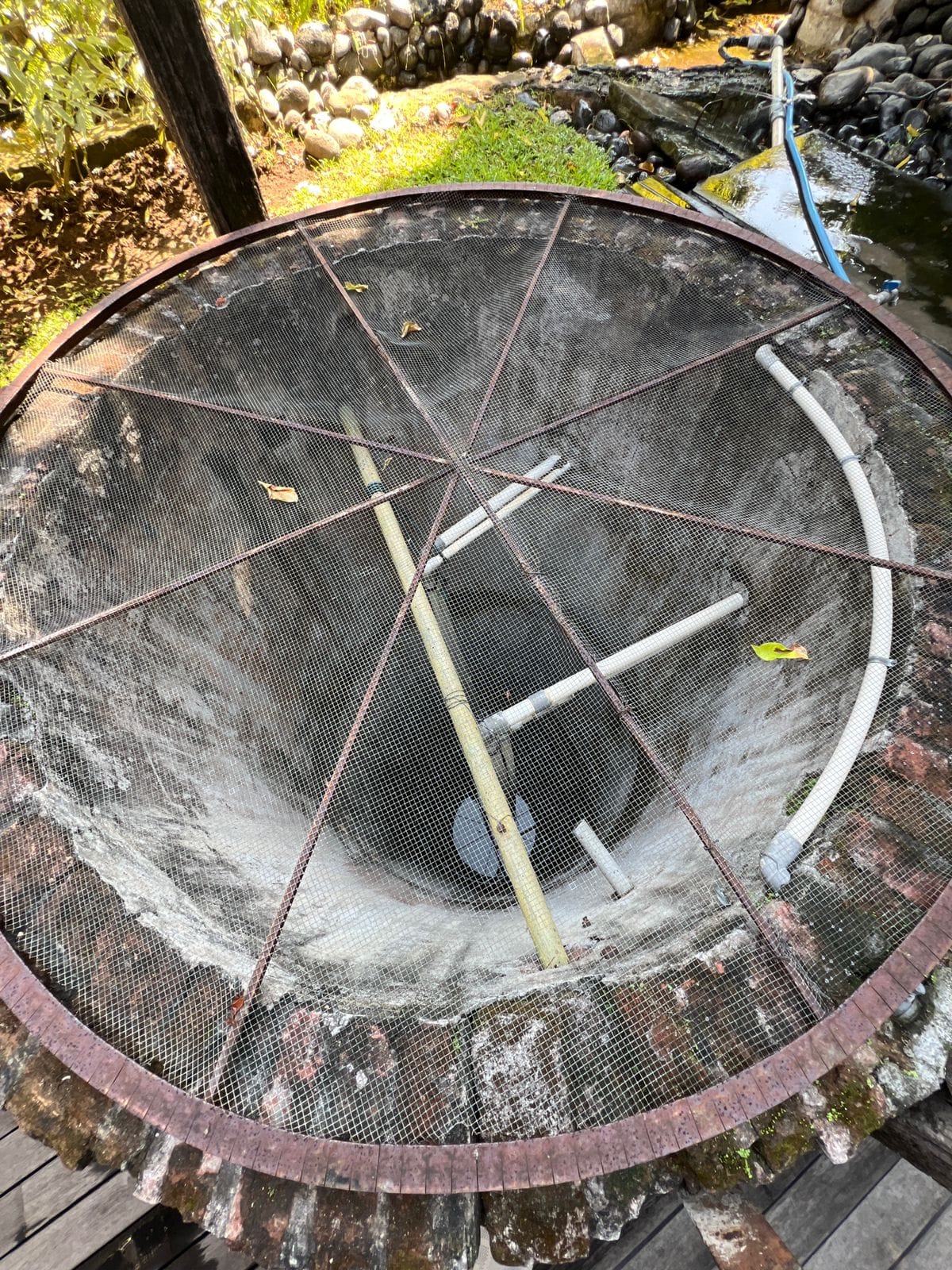
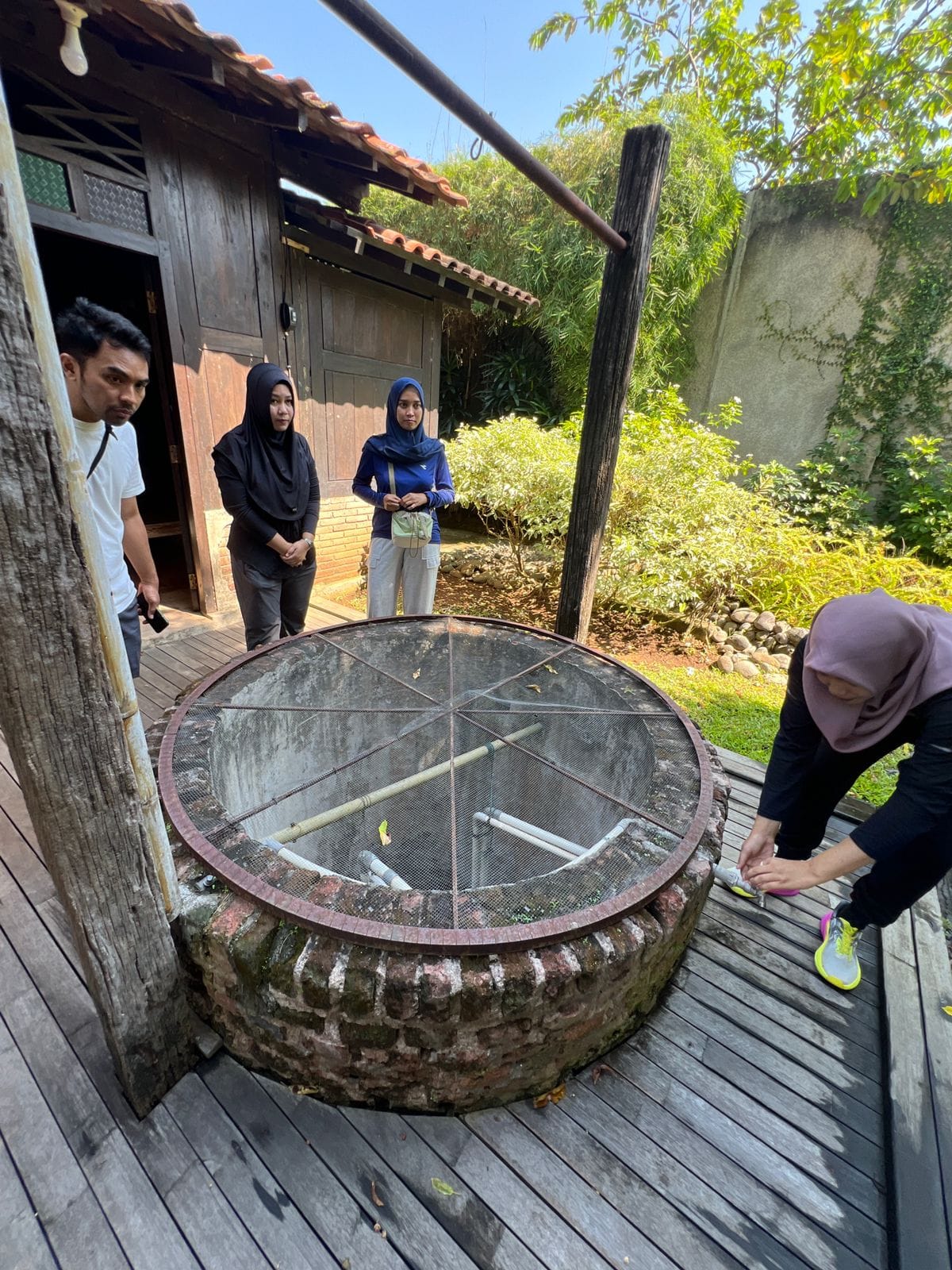
Sumur Sritanjung (the “fragrant water” well)
It's inside the pendopo where you can find Sumur Sritanjung, the well tied to Banyuwangi's name-banyu wangi, "fragrant water." People come here to see, touch, and hear it. As we leaned in, we noticed a faint scent... We weren't expecting it. I felt a little mystical - just a soft note, there and gone—but yet it happened right by the well right there—and we're so lucky to smell it, since not everyone can smell it.
The water is still being used in ceremonial rituals in Banyuwangi and the local people also believe that it can be used to cleanse your energy and provide you with benefits. You are advised to also taste the water and wash your face three times.
Rumah Adat Osing (Osing traditional house)
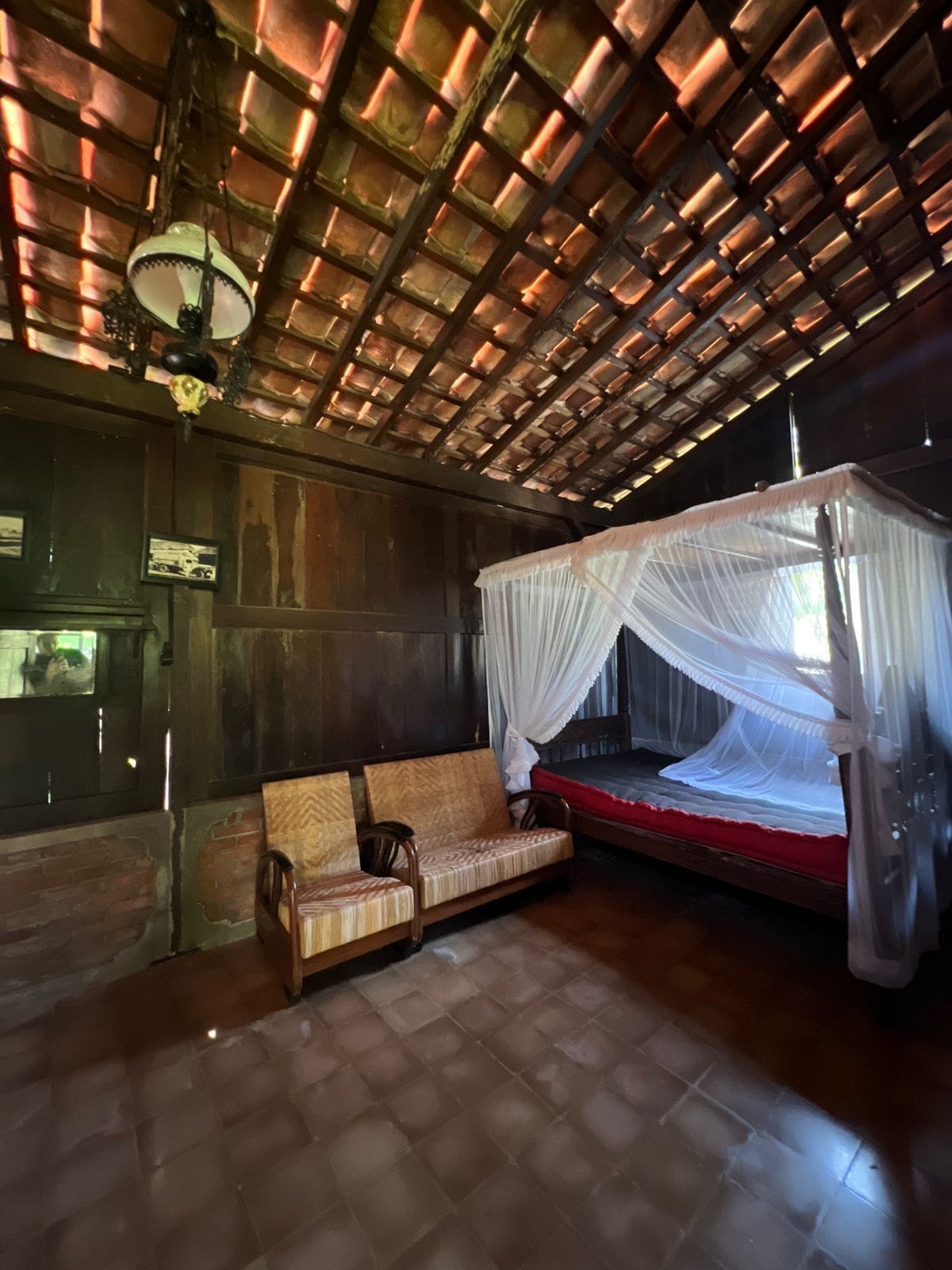
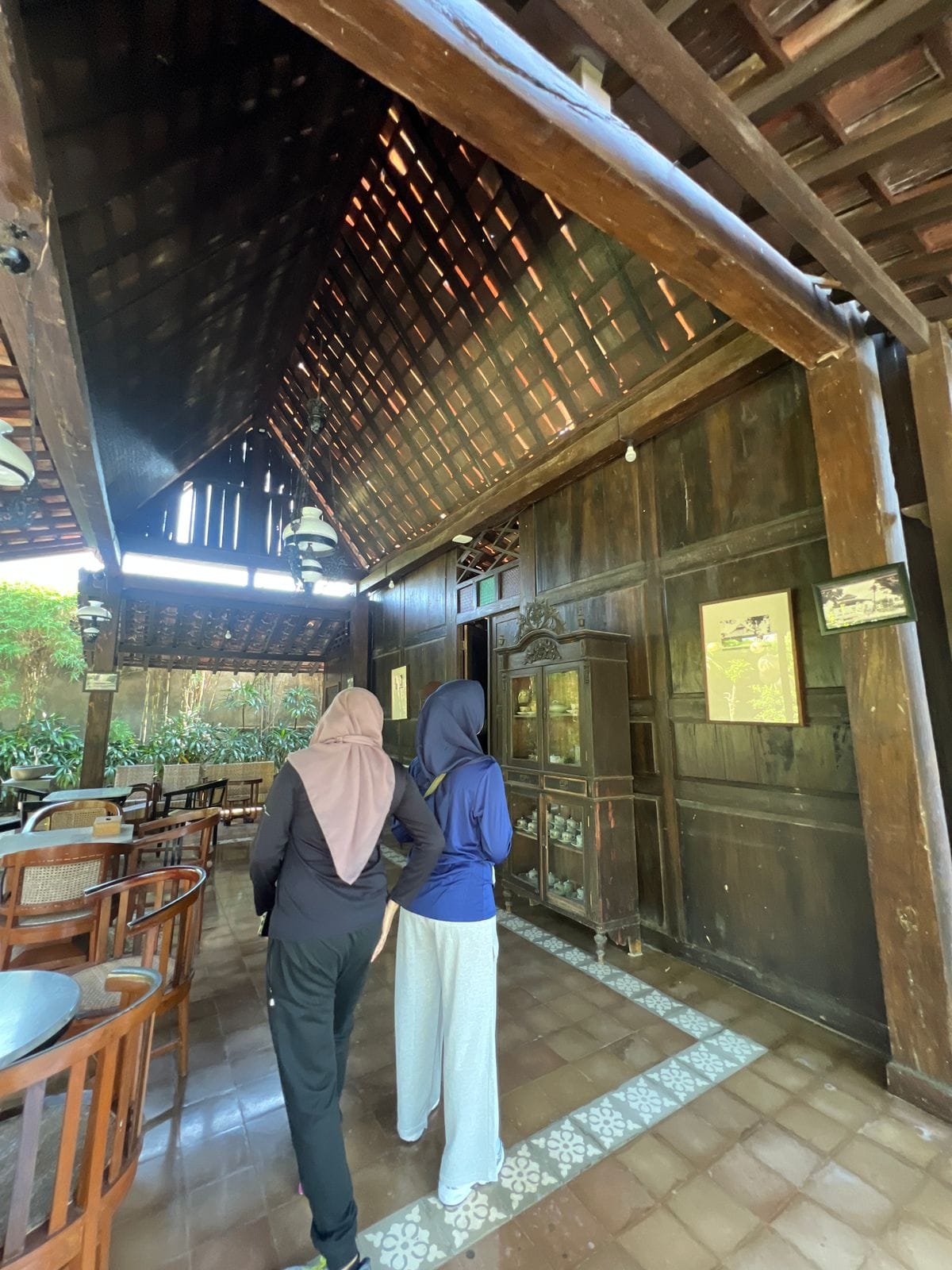
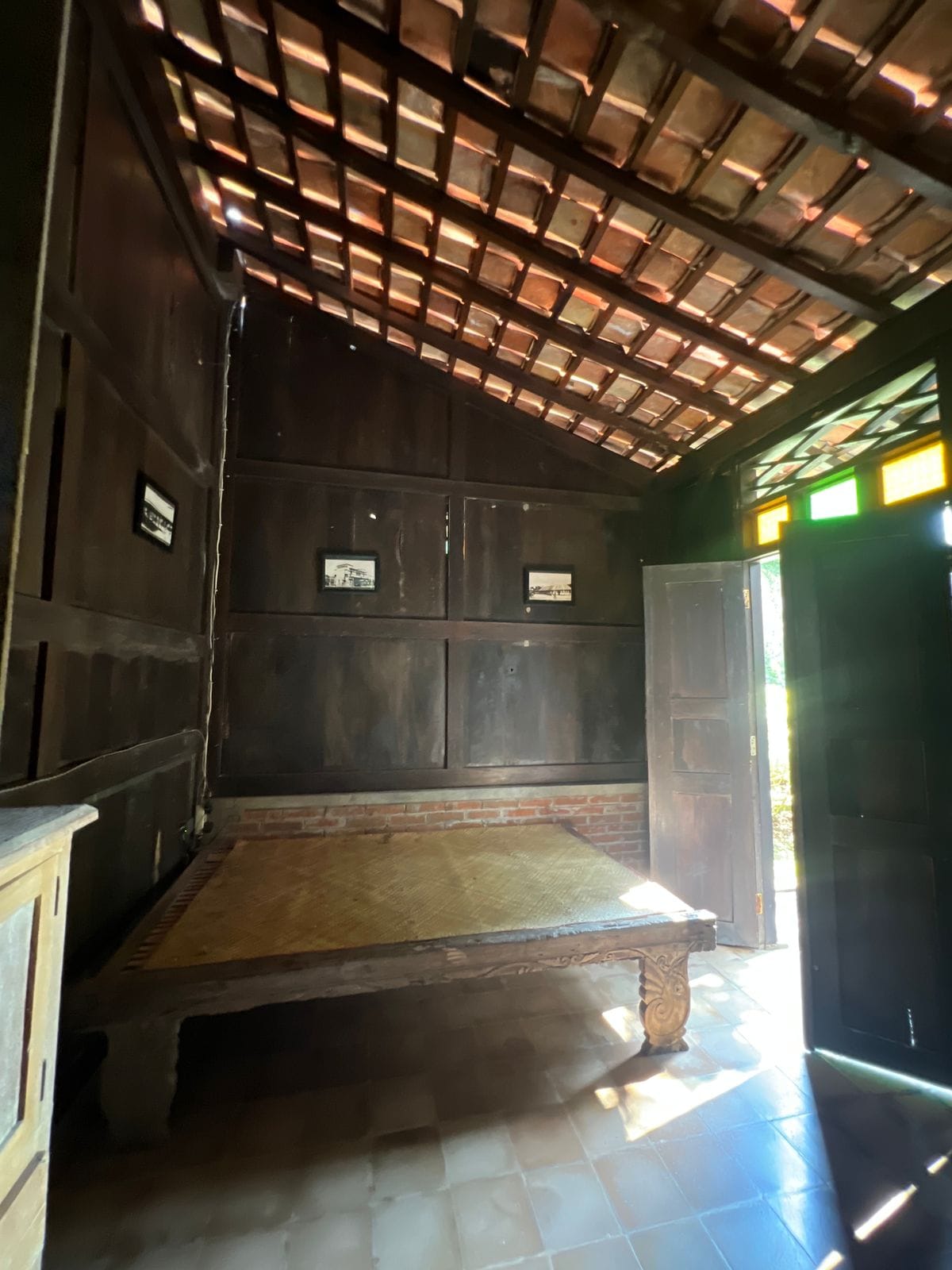
In the Pendopo area there's a Rumah Adat Osing showcase—hand-hewn timbers, high rooflines, and carved details that'll tell you Banyuwangi's roots are Osing. We can check out the local vernacular right on our route. You can see live-in Osing houses, kitchens, and yard rituals in Kemiren Village later if you want the full experience.
Old Bakery and Mesjid Agung
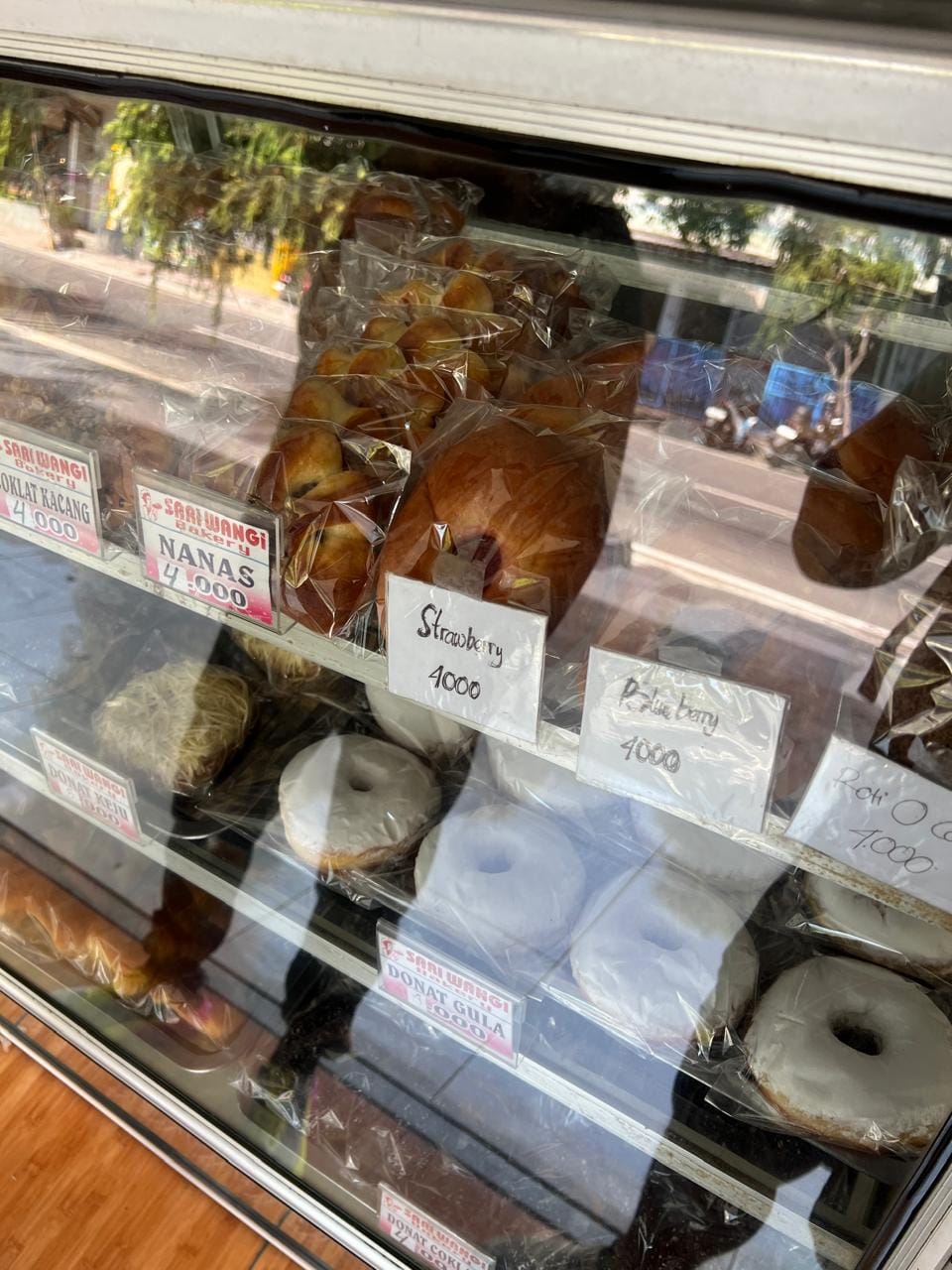
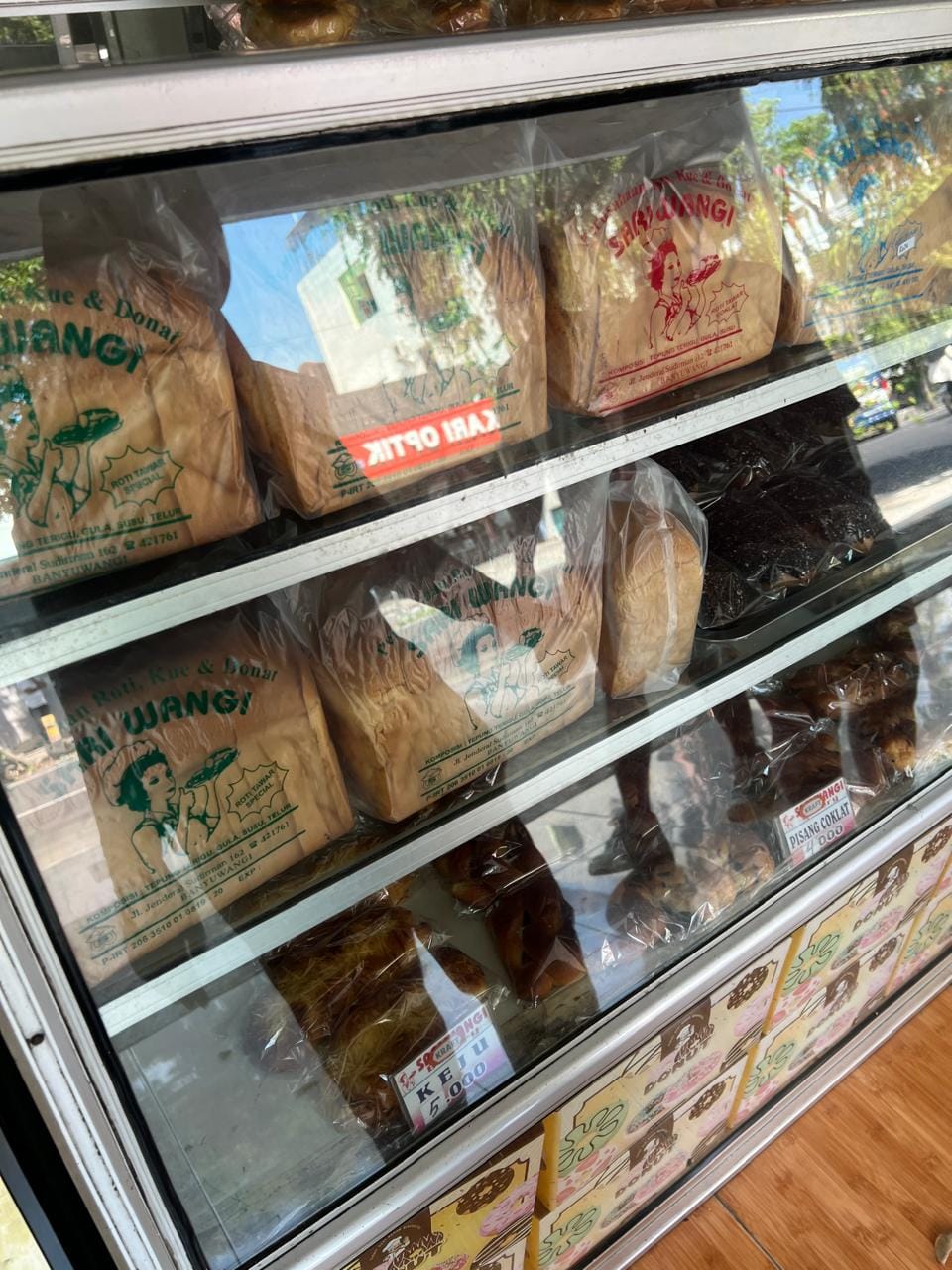
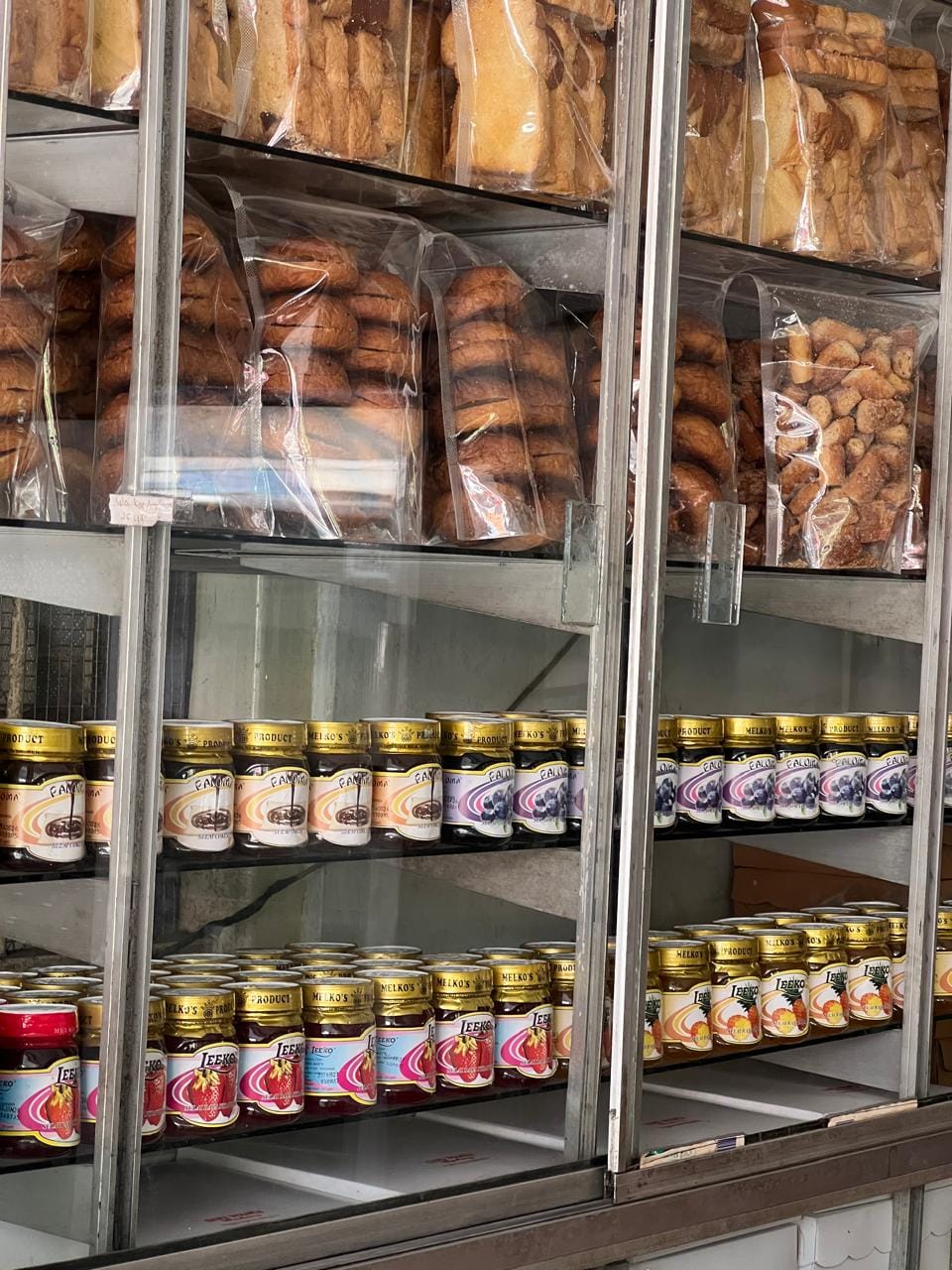
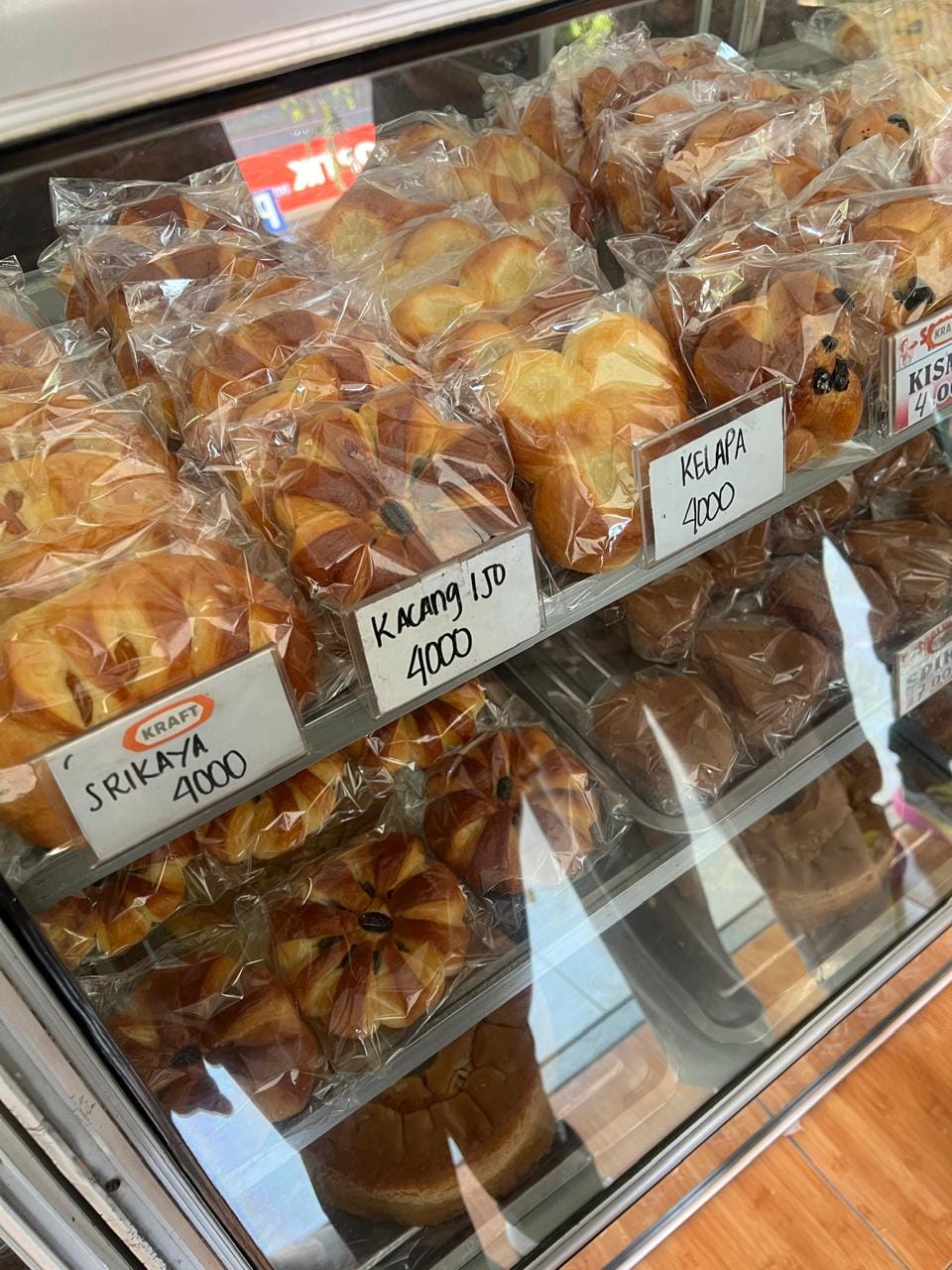
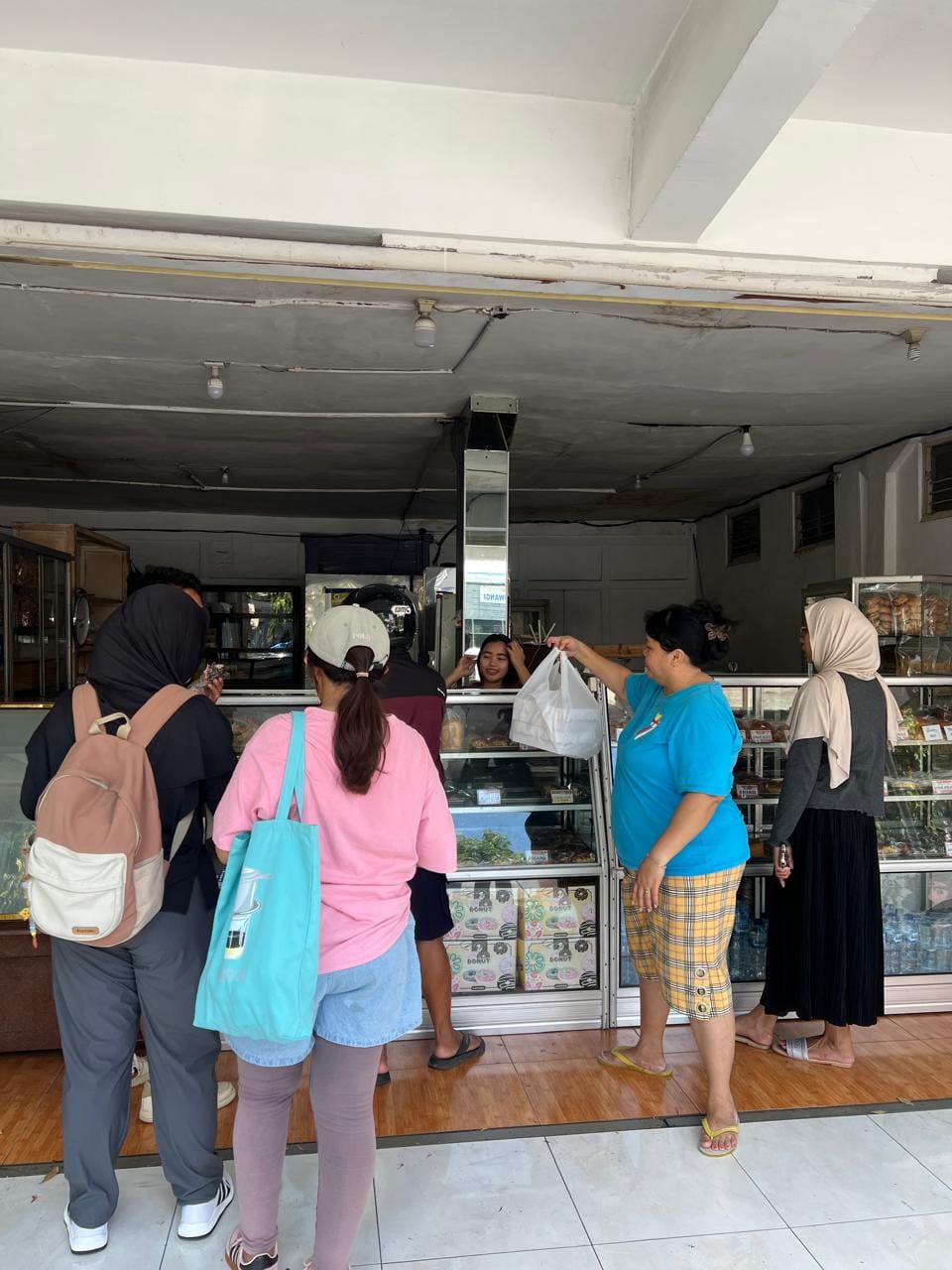
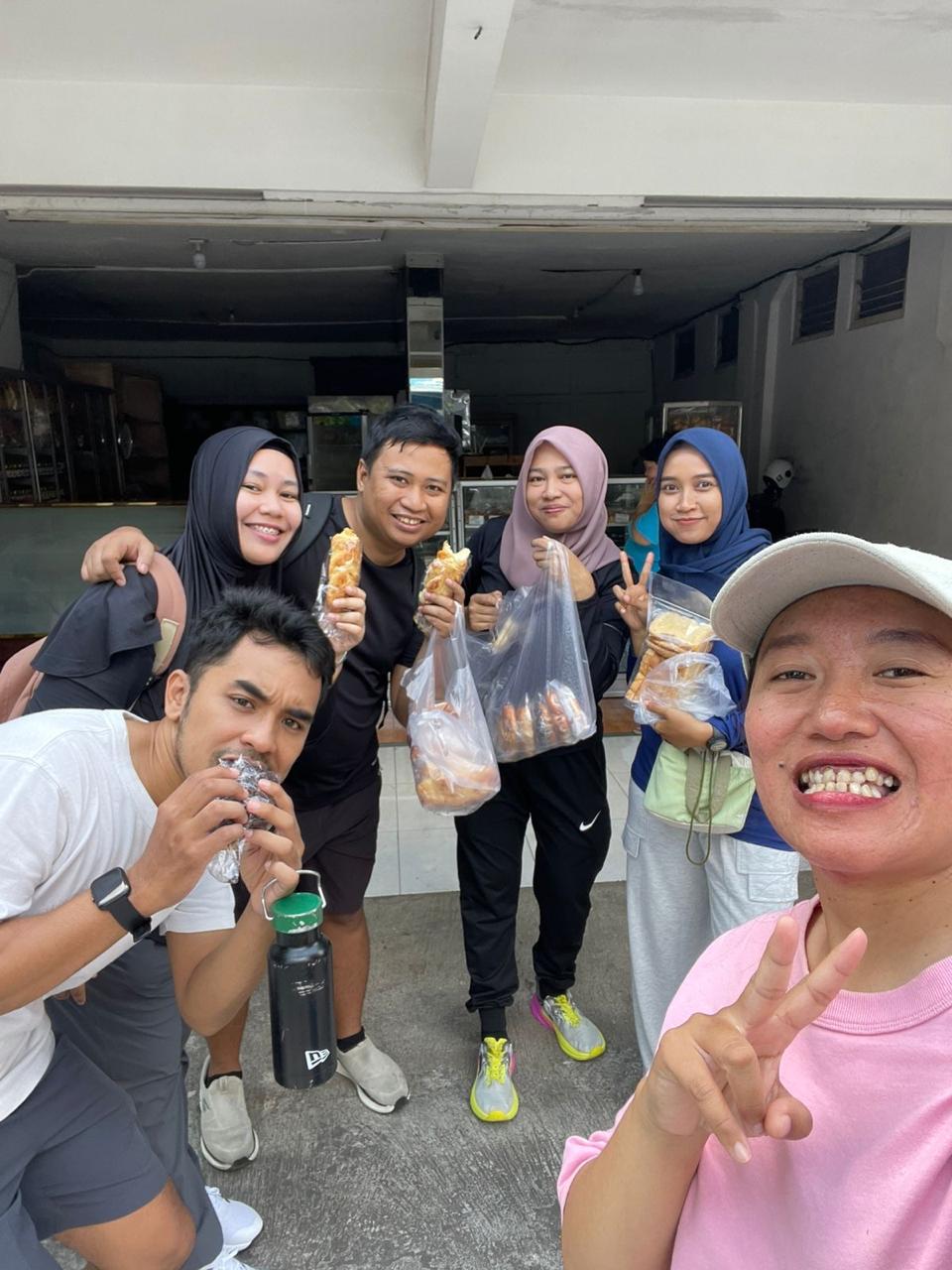
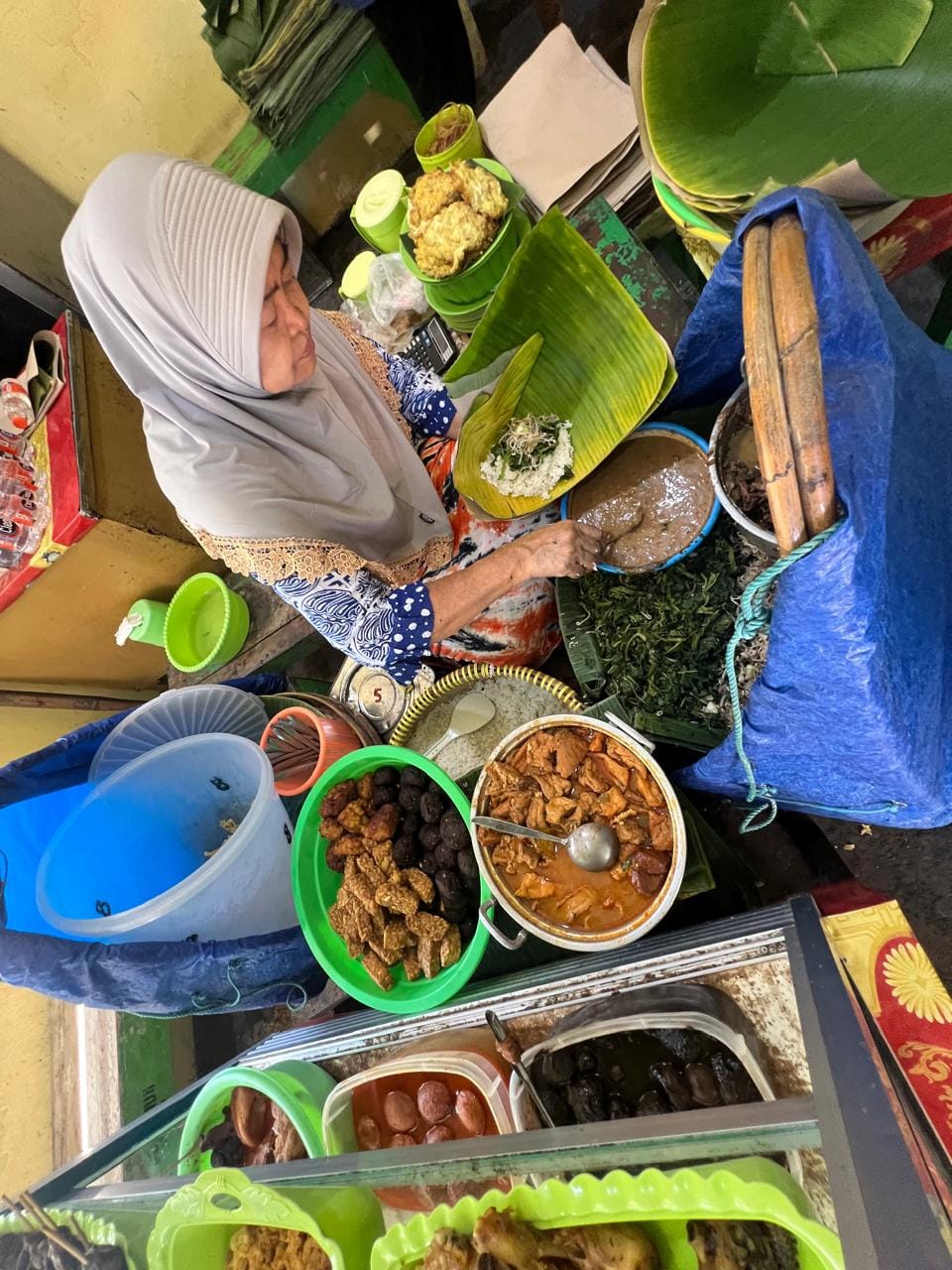
Then after visiting Pendopo Blambangan, we headed to an old bakery to have a taste of the classic bread made up of bananas, cheese, etc. I really enjoyed the taste of the classic bread because it is not as buttery as modern cakes, but rather has a fresh and fresh Indonesian flavor. During that time, butter was not very popular in Indonesia, and I remember when I was a child that we only had margarine and that was all we ate. Taking the taste of the bread brings back memories of my childhood.
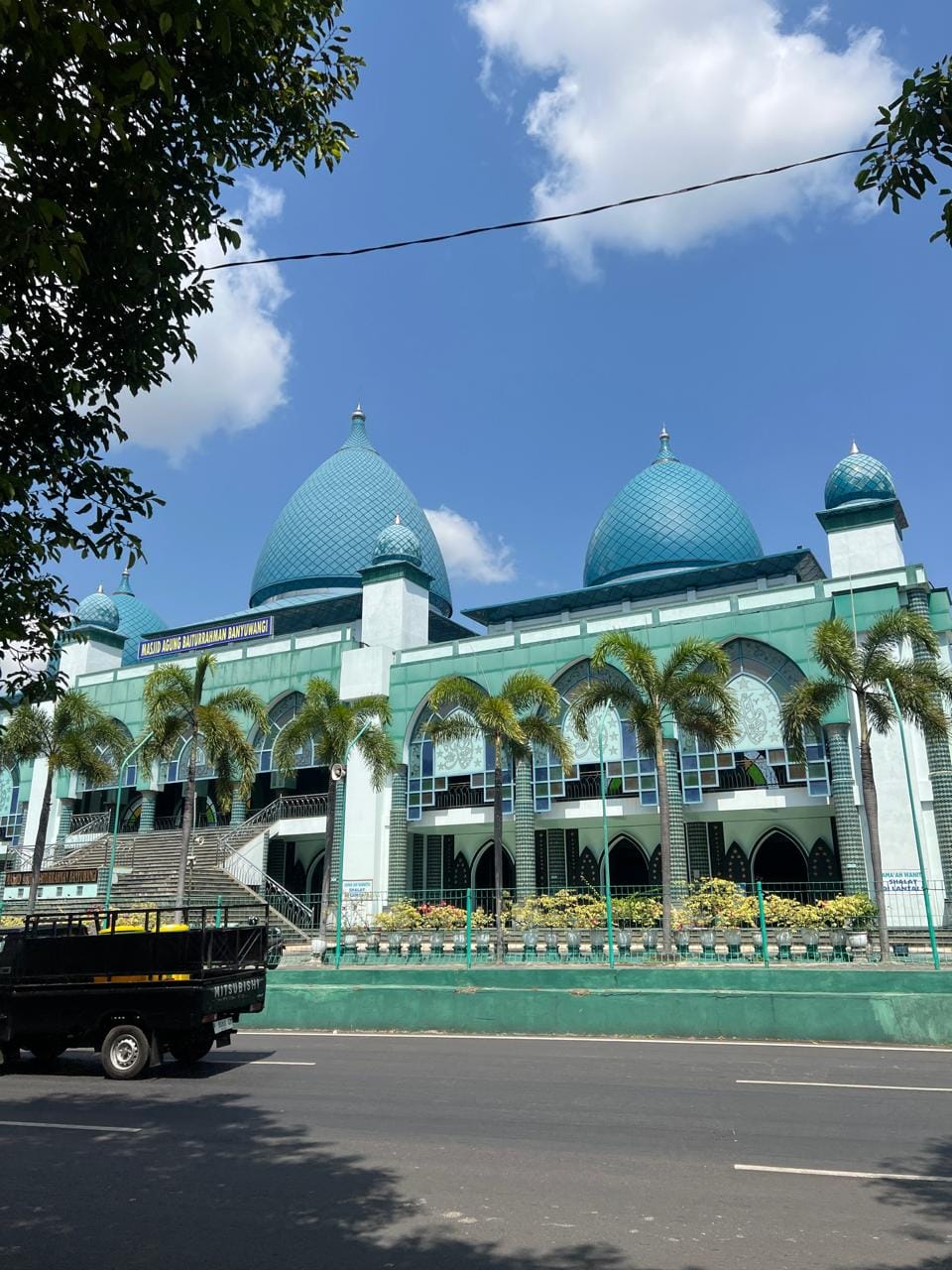
After that, we walked past Mesjid Agung. From here you can see how the city was stitched: pendopo and park on one side, big mosque anchoring faith and community on the other. The building's appearance has changed—repairs, additions, fresh paint—but the purpose hasn't. People spill into the park on Fridays; after tarawih, lights and voices fill the grass.
Fun facts (quick):
- The mosque sits where the Catur Gatra idea comes to life—administration, worship, market, and square in one frame.
- Old-timers say earlier prayer houses stood here before the larger mosque rose and kept growing with the town.
- Best moment: just before Maghrib, when the call rolls over Taman Sri Tanjung and the whole square seems to exhale.
A Thread Between Time
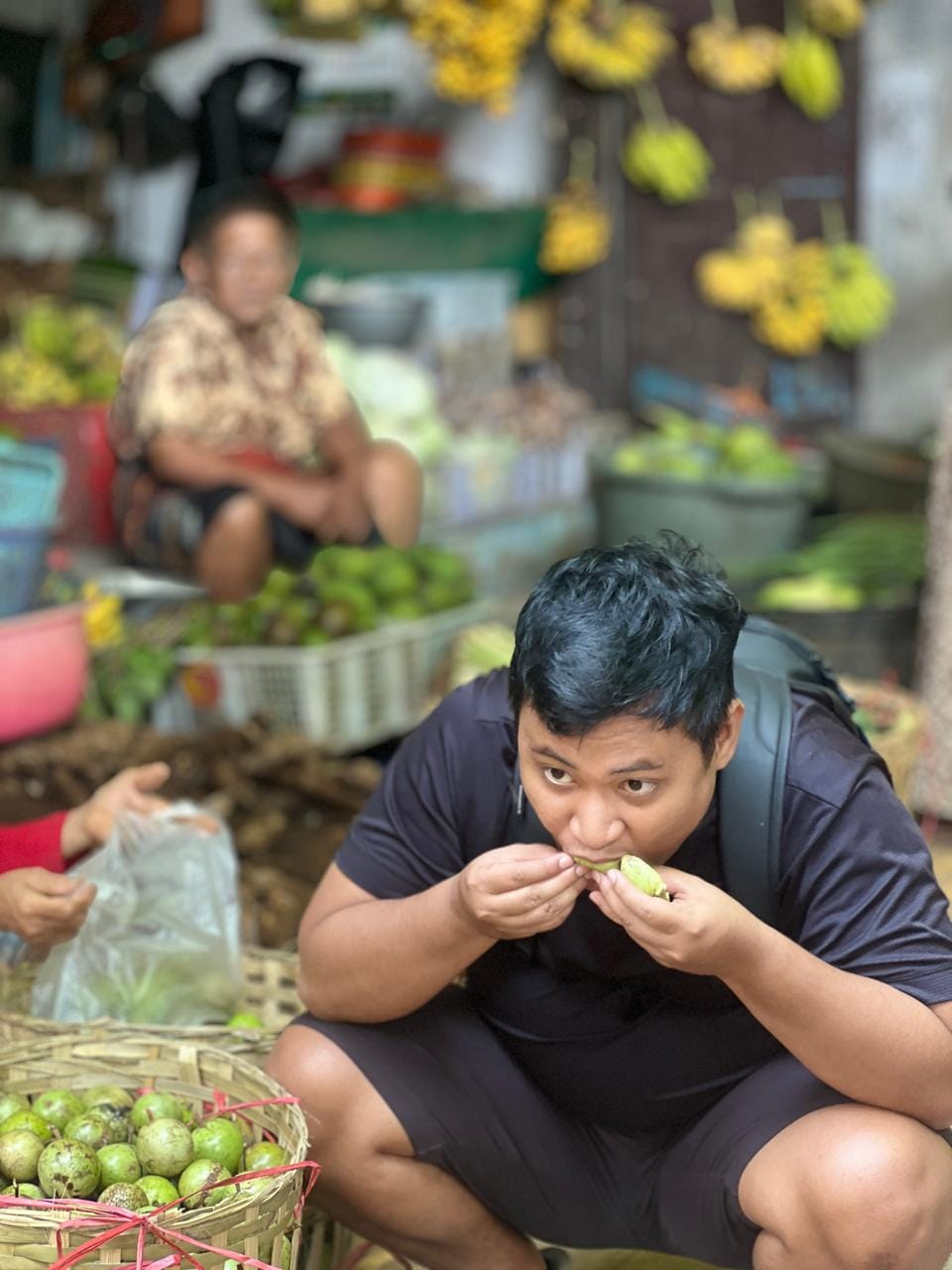
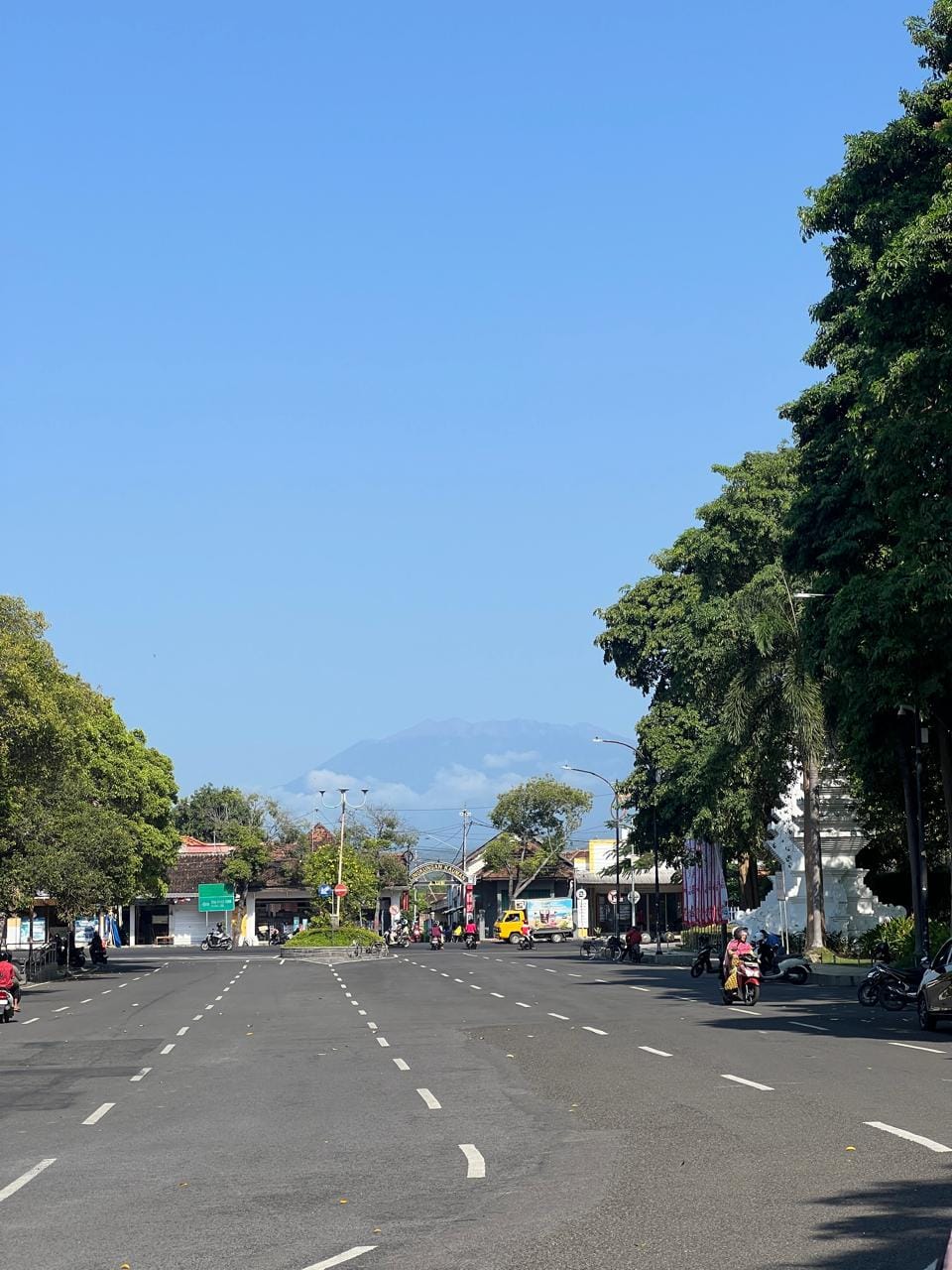
The more I walked, the more the city spoke to me.
Not through museums or plaques, but through textures — cracked walls, roots pushing through the pavement, traces of old trade carried by the wind, the familiar rise of prayer between houses.
Banyuwangi isn’t separate from the Blambangan Kingdom’s past.
It’s the part of that story that kept walking forward.
What was once the last Hindu kingdom in Java became a port, then a town, and eventually this: a living place that still carries its history in everyday life.
Here, history isn’t kept far away like in a museum.
It’s right in front of you — in the streets, in the houses, in the people you meet.
Some cities show their history.
Banyuwangi lets you feel it as you walk.
Last but not leasts
Storia made me realize that history isn’t a distant memory.
It lives in the streets, it moves with you,
and sometimes it just needs the right guide to reveal itself.
Slow your steps and the city begins to talk.
Take a moment and the story opens up.
And if you want to truly feel Banyuwangi,
walk with Storia — the past feels closer that way.