
A festivity rooted in gratitude; witness villagers become "buffalos" in a symbolic dance of agricultural cycle.
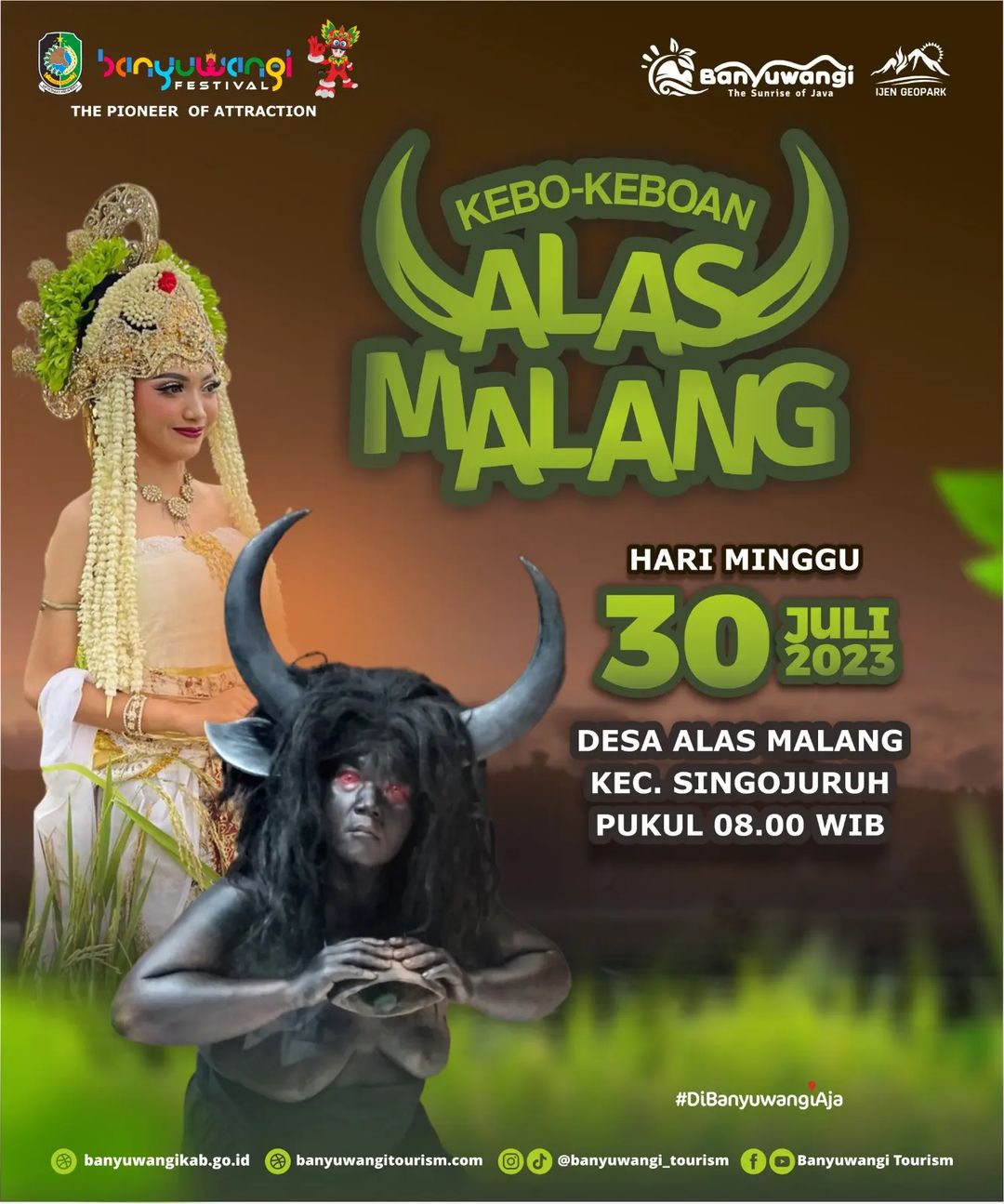
The Kebo-Keboan tradition is a distinct ritual held in Desa Alasmalang, Kecamatan Singojuruh, Banyuwangi.
Scheduled for 2nd October 2023, at Dusun Krajan, Desa Alasmalang, Singojuruh, it is celebrated annually on the 10th day of the Sura month.
This ritual serves a dual purpose: expressing gratitude for the season's harvest and warding off misfortunes.
This agrarian custom begins with a village feast and culminates in the "ider bumi" ritual where dozens of "buffalos" move through the village, enacting the agricultural cycle from tilling to sowing seeds.
Notably, these "buffalos" are villagers painted black, donning horn accessories and bells, closely resembling real buffalos. The celebration draws locals and tourists alike, boosting the local economy by offering opportunities to sell food, beverages, and local crafts. Bupati Banyuwangi Abdullah Azwar Anas underscores the significance of this tradition in fortifying Banyuwangi's cultural and economic fabric.
The festivity starts with a communal meal featuring 12 rice dishes and 12 traditional sweets, symbolizing life's cyclical essence. A unique aspect involves 30 "human buffalos" parading the village, accompanied by the native Using music. Some participants believe they channel spirits during the procession. The ritual ends with the ceremonial planting of rice seeds, which are eagerly pursued by locals for their perceived increased yield. Rooted in 300 years of history, this tradition can be traced back to the village ancestor, Buyut Karti.
Key Highlights:
- Kebo-Keboan Tradition: A ritual in Desa Alasmalang held every 10th of the Sura month to express gratitude for good harvests.
- Cultural Representation: Villagers paint themselves black and wear buffalo-themed accessories to mimic buffaloes, engaging in symbolic farming processes.
- Economic Significance: Bupati Banyuwangi Abdullah Azwar Anas emphasizes the tradition's potential to boost the local economy by attracting tourists and promoting local products.
- Roots of the Tradition: Originated from Buyut Karti's revelation during a disease epidemic in Desa Alasmalang, where farmers transformed into buffaloes.
- Celebratory Aspects: The event begins with a feast at the village crossroads, using 12 tumpeng and special dishes, symbolizing time cycles.
- Spiritual Significance: Some participants believe they are possessed by spirits and mimic buffaloes plowing fields, with the culmination involving sowing paddy seeds believed to ensure a rich harvest.